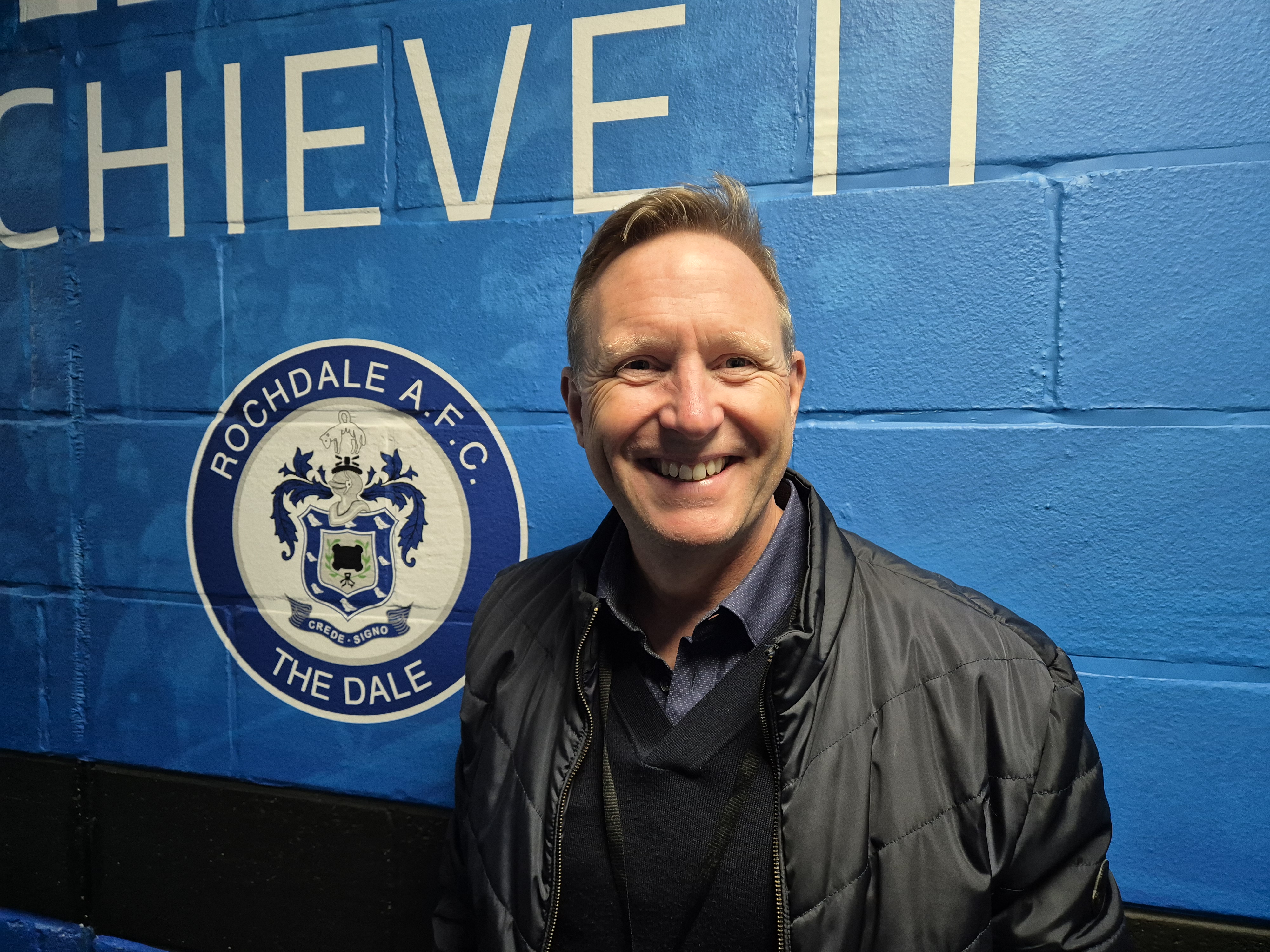
Andy Duff has worked at Wrexham AFC, Everton and Rochdale AFC, three clubs at very different points in their development. In the first edition of The Operator, he talks to Fanbase CEO Alasdair Crawley about why even simple changes are hard to make at a football club, and what helping to rebuild Rochdale AFC taught him about getting them done.
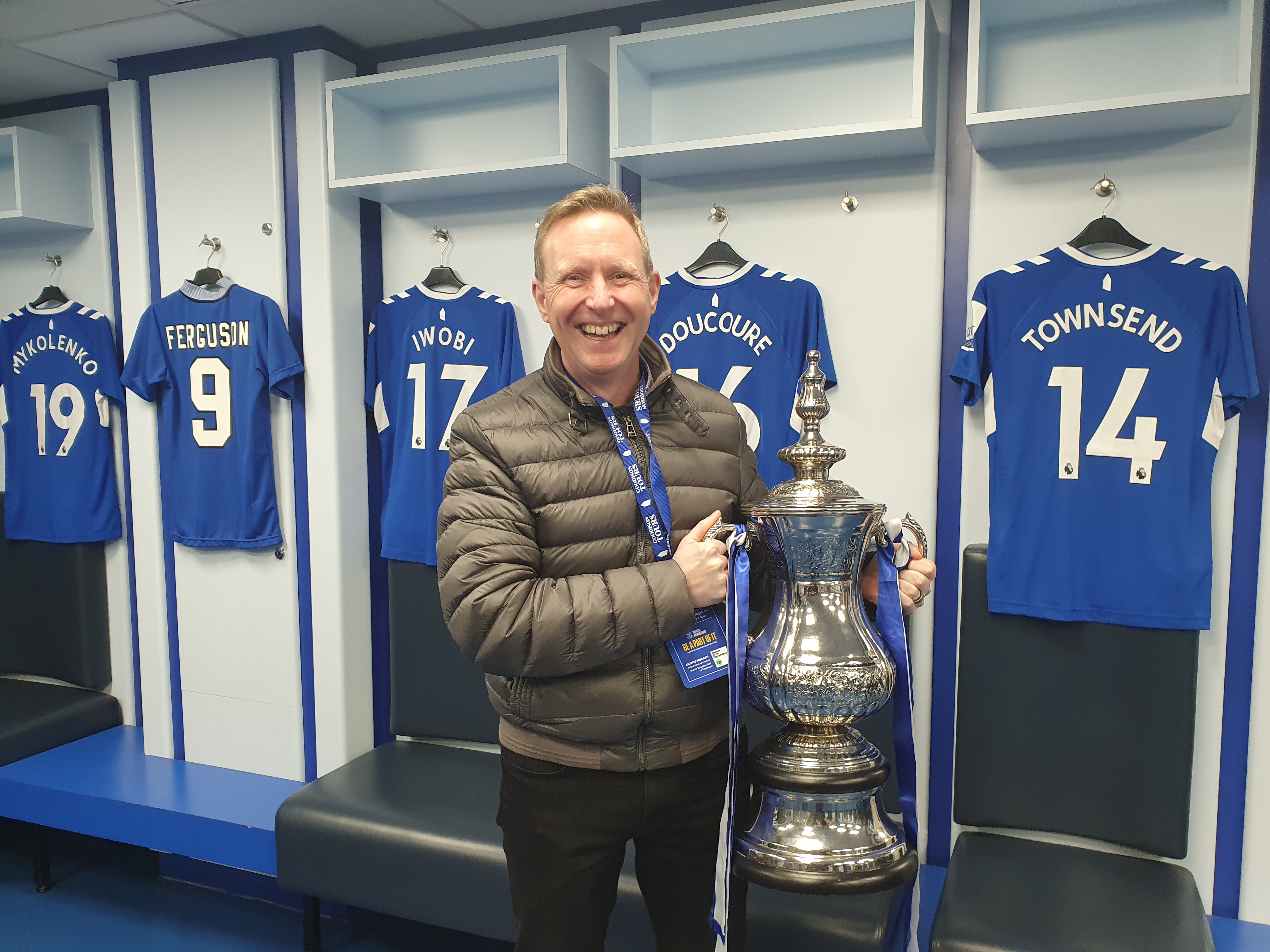
The Operator is a new editorial series from Fanbase and Business of Sport about the people, decisions and ideas behind the business of football. Each edition focuses on one subject, exploring what a club did, how it played out and what others could take from it.
Most people running football clubs could write a list of what needs fixing at their own club without too much thought. What’s harder to explain is why so many of those lists stay the same from one season to the next.
Andy Duff believes the problems are often more straightforward than people care to admit. “There is no revolutionary blueprint for running a football club,” he says. “Running it well is probably the same model everywhere. I just strongly believe people get it wrong.”
It’s a timely point. The Independent Football Regulator’s licensing regime is bringing greater scrutiny to how clubs are run, including their financial sustainability, business planning and engagement with supporters, and Andy suspects many clubs have some catching up to do. Asked how many actually have a business plan, he ventures an estimate: “A lot less than half, probably a quarter.” Neither Wrexham nor Rochdale had one when he arrived, he says. “Good clubs are already working in that way. It’s just that clubs with poor liquidity, poor decision-making, very, very poor fan engagement just aren’t running in that way currently.”
Rochdale AFC were in a difficult place when Andy arrived. The club had dropped out of the Football League, the previous chairman had put it up for sale and it was heading towards administration before the Ogden family stepped in. “It was every possible challenge a football club could go through,” Andy says. “Twelve to eighteen months at Rochdale was like ten years anywhere else.”
He describes “some toxicity in the fan relationships” and “a significant breakdown in trust”, alongside a skeleton staff where people had left and not been replaced. The ticketing system didn’t work, the retail operation wasn’t great and sponsor relationships weren’t brilliant, and supporters felt all of it on a matchday. “People couldn’t get in, people couldn’t buy a ticket. When they got in, they were having a poor experience, never mind a pitch that drained poorly in the Rochdale rain resulting in postponed matches.” None of those problems was unusual on its own, and Andy’s experience suggests that the reasons clubs struggle to fix them are familiar too.

The first thing Rochdale had in its favour was an ownership group that knew what it wanted. The Ogden family’s objectives were to return to the EFL within three years, become financially sustainable within five and use the club to deliver significant social impact in Rochdale over ten.
Just as important to Andy was that he and the owners were saying the same thing. “The single piece I’ve thought about was complete alignment between me and the owners,” he says. “There were a number of big decisions to be made very, very quickly, and that alignment was critical.” It meant he could make decisions without worrying about the owners contradicting him, and that the same direction was understood across the football side, the off-field staff and the community trust.
“Everybody knew we’d spent time clearly defining what we wanted to achieve and how we were going to do it, and everybody was mandated with the authority to do it,” Andy says. “That really helped just move things forward quickly. That was the most simple thing.”
The direction itself was shaped with help from AML, a London agency within the Ogden family’s wider business, which worked with the club on its identity and a vision called For Generations to Come. Supporters were consulted on what the club stood for, and the result was a shared story that staff and fans could understand. Andy is keen to stress how quickly it came together. “We’d worked out and articulated that story in a matter of weeks. This is not a ten-year project.”
Beneath that direction, the day-to-day running of the club was close to chaotic. “People didn’t have job descriptions, people weren’t aware of their responsibilities, decision-making authority or accountability,” Andy says. One member of staff, now the club’s head of football operations, had been doing almost everything, so the starting point was to ask what a well-run club at the next level would look like.
“We talked a lot about being EFL-ready even though we were sat in the National League,” he says. “What is a well-run structure in a League Two club? Who do we recruit to do those roles?” Rochdale brought in a head of operations, a commercial sales manager and Fan Engagement Officer, which allowed existing staff to focus on what they did best.
With that structure in place, the club gave the whole organisation a regular rhythm. Department heads met at ten o’clock every Monday to agree priorities for the week, the month and the next three months. The club also built a shared calendar that hadn’t existed before, and Andy gives the kit launch as an example of why it mattered. “You’re launching a shirt in July, you’re manufacturing it a chunk of time beforehand, and you want to go through some genuine fan consultation, so you’re probably starting that process ten months earlier in September.”
The same thinking applied to season-ticket renewals, ticket pricing and fan forums. “Everybody involved in that operation knew exactly what each piece of it was doing at any point in time,” Andy says.
Once those processes were in place, Rochdale could begin looking further ahead to more strategic challenges. The first year was about getting the operation working properly, and in the second the club could turn its attention to bigger projects, including changes to ticketing and retail and investment in stadium and training ground facilities.
That groundwork showed its value when Rochdale took on the unusual task of rebuilding their pitch midway through the season. The project cost more than £1 million and took around six weeks, with home fixtures moved to Accrington Stanley in the meantime and contractors working through Christmas. Andy remembers driving to Accrington with supporters’ flags in the back of his car, and he’s clear about what made it possible. “It required an absolute minute level of project management,” he says. “Everyone was lined up and knew what we were doing.”
Structures and calendars only go so far if people don’t want to work within them, and Andy sees this as one of the biggest barriers clubs face. “You will have people in clubs, whether that’s a board director or a member of staff, who’ve got their personal agendas,” he says. “There’s that passive resistance you get when you’re trying to deliver change, and it’s really hard to overcome.”
In practice, that resistance rarely looks like open opposition. “I don’t believe people actually want you to fail,” Andy says, but when a new executive makes obvious improvements, it can reflect badly on the directors who were running things beforehand. If they had chosen the kit supplier, ticketing partner, stadium naming rights partner or brewery deal, and those arrangements could be improved commercially or for supporters, change was sometimes made quietly harder. “Decision meetings are delayed, budgets are not approved, contract proposals drag on and difficult conversations are avoided.” The pace slows, and the issue can end up buried in the day-to-day running of the club as results on the pitch take over the agenda.
At Rochdale, that meant some difficult conversations in the first few months, “at every level, me with the board and individuals that had been involved with the club for a while, right down to people working in the bars, ticket office and shop”. Part of that work was explaining what the new direction meant for each person.
Andy brought every member of staff together for a couple of hours, intending it to be more of a workshop than a briefing, and went into detail about what the changes would mean for their jobs, including practical questions around flexitime and holidays. When the club followed up two weeks later and asked for questions, the response wasn’t what he’d hoped for. “It was like tumbleweed. Nobody spoke. Everyone sat in stunned silence.”
A further session a fortnight after that was far more productive, because it was grounded in the reality of the club’s finances. “This is a football club that is losing north of a million pounds a year,” Andy says. “What can we do?” The answer that emerged above everything else was the experience supporters have at the ground.
“Recognise that every game is probably someone’s first game at Rochdale,” he says, “and try to make sure that every interaction they have with a public-facing person in this club is as positive as possible.” It gave staff something tangible to work towards and the club a shared standard to return to when people fell short of it.
The rest, in Andy’s view, comes down to relationships, and plenty of them. “There are not thousands of relationships, but there are hundreds of micro-relationships to manage,” he says. That includes the owners, the board, the manager, the players, sponsors, the supporters’ trust and influential fan groups that aren’t officially recognised, and Andy argues that momentum comes when owners and executives are clearly aligned and accessible to supporters, and the manager is “at least liked”.
On matchdays, that meant walking the ground and talking to as many people as possible. “Walking around every kiosk, not to check the kiosks are working, but to chat with the people working the kiosks, walking in the bar, going around the boxes, meeting the board.”
He believes it works because supporters can tell whether the effort is genuine. “If people believe you’re trying to do it for the right reasons and see you’re working hard to achieve it, then it generates a lot of warmth,” he says, “because ultimately people love their club and they want their club to succeed and be better.”
He’s also clear about where executives and owners sit in the life of a club. “It’s a clichéd phrase, but we are short-term custodians of a club that’s been around a long, long time,” he says. “There are people who’ve got multi-generational relationships with that football club, grandparents, parents and their grandkids, and working with that group is what is really, really important.”
Not every change at Rochdale happened as quickly as Andy wanted, and some didn’t happen at all. One of the slowest was improving the retail operation and, alongside it, bringing the ticket office and club shop together into a single commercial hub outside of matchdays.
The shop sits at the far end of the stadium, completely separate from the Main Stand and the club offices, and the club didn’t have the technology to sell tickets there. At a time when supporters were still buying a large number of tickets in person, that meant buying a ticket in one place and a shirt somewhere else entirely. Both teams resisted moving to a shared location, even though the club was paying for two separate sets of staff, neither of them fully occupied, while supporters were being poorly served. “Both from a club cost and fan point of view this was crazy,” Andy says. In the end, it took more than 18 months, a new ticketing system, a new retail operations partner and new members of staff to make the change.
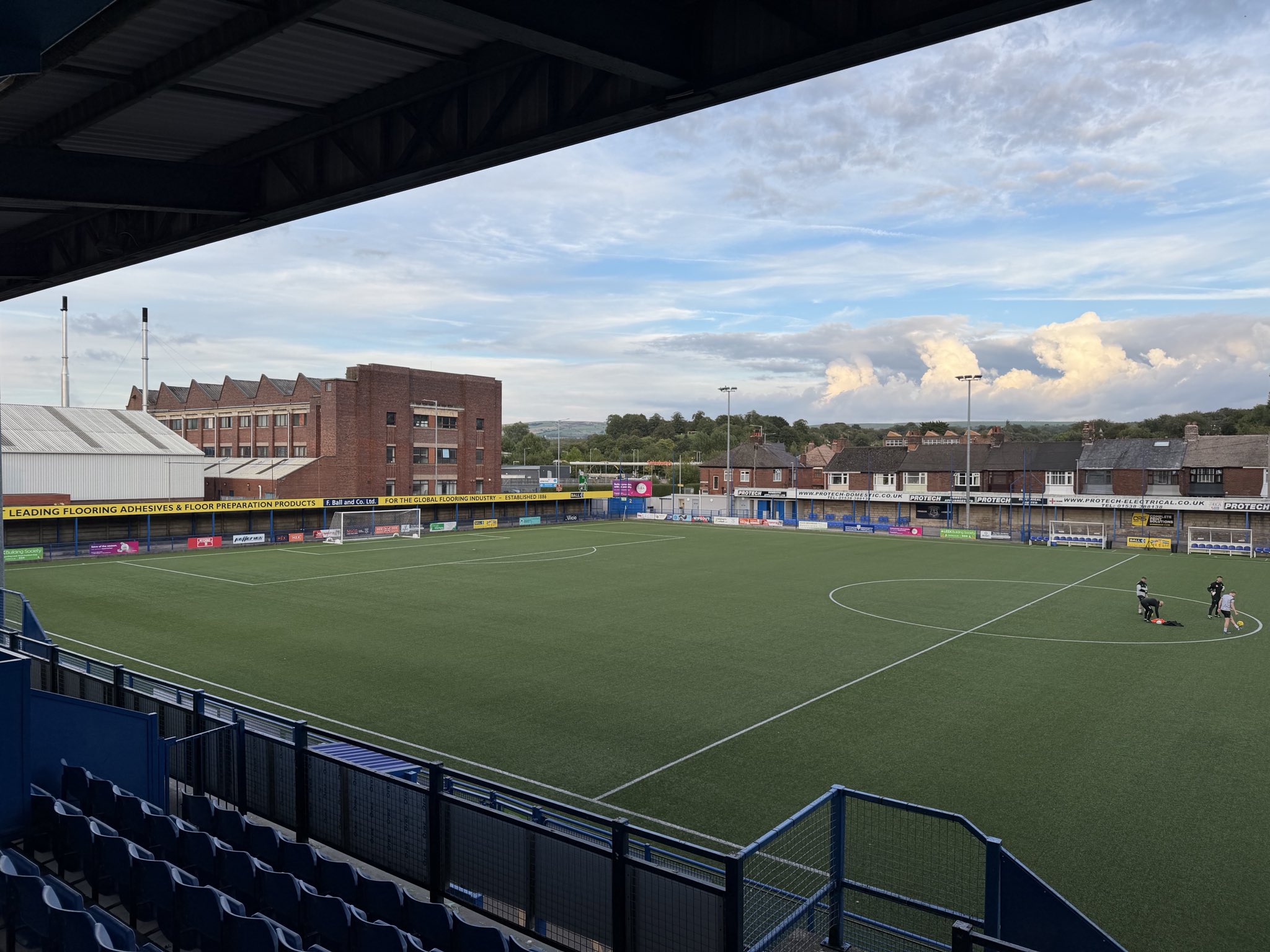
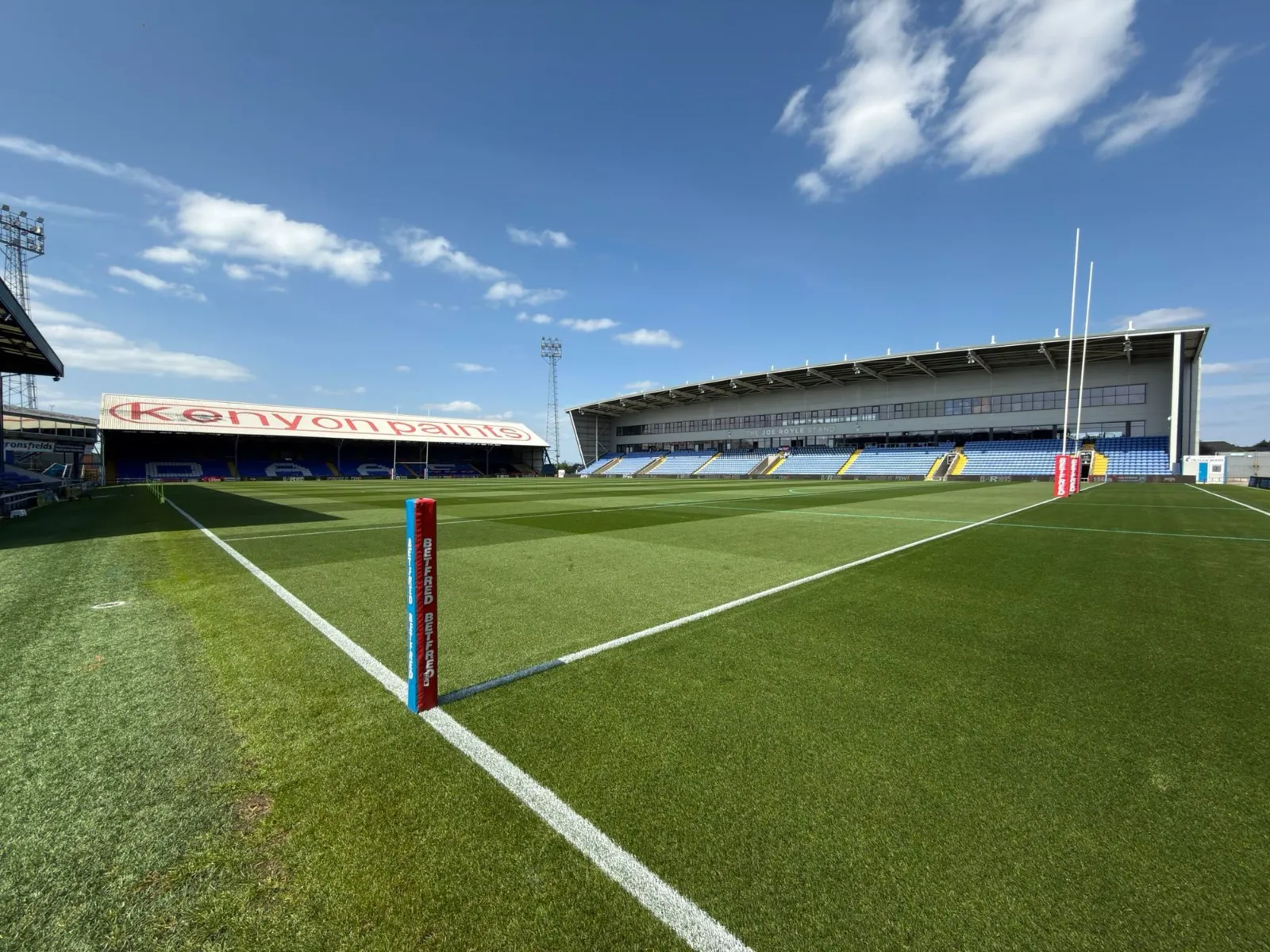
The change he never managed was rethinking where away supporters and long-established fan groups sit inside the Crown Oil Arena. The ground holds more than 10,000, with a home terrace behind one goal, a seated home stand behind the other and a Main Stand housing 12 executive boxes, the directors’ boxes and hospitality lounges. That leaves away supporters along the side of the pitch in a stand that holds more than 3,000.
It creates several problems. That capacity is very rarely reached in the National League or League Two, while the cost of running and stewarding such a large stand remains. And on the rare occasions it is full, such as a local derby, the club ends up hosting far more away supporters than it is required to, which hands the visitors an advantage on the pitch.
The solution would have meant extensive fan consultation and a complete redesign of the stadium’s layout, asking supporters who had held season tickets in the same spot for years to compromise, alongside major capital investment so that nobody was moved somewhere with worse facilities. The strategy was clear and early conversations with fan groups took place, but the change was never made. In Andy’s words, it was a “vitally necessary improvement”, and its absence leaves Rochdale at a football and commercial disadvantage in the seasons ahead.

What stands out from Andy’s time at Rochdale is how ordinary most of the fixes were. Job descriptions, a weekly meeting, a shared club calendar, a clear set of objectives and a focus on cashflow don’t need a revolutionary idea or an enormous budget, and yet he found few of them in place when he arrived at either Rochdale or Wrexham.
Andy put it simply when describing the commercial operation he inherited at Wrexham. “It’s not very sexy stuff, but it’s systems, it’s processes, it’s understanding your commercial inventory,” he said, and that’s what Wrexham needed. Much the same applied at Rochdale.
The difficulty, his experience suggests, isn’t necessarily knowing what needs to change but getting everybody inside a football club to agree on it, take responsibility for it and keep doing the work when the initial enthusiasm has worn off.
So why don’t more clubs manage it? Andy points to the same obstacles he came up against at Rochdale. “It’s a combination of personal agendas, a board that is marred with infighting and leaders who aren’t willing to live with the consequences of making big decisions,” he says, consequences that might include “losing a job you’ve worked years to achieve in an industry you love”. Add in the need to consult properly with a large fanbase and bring a wide range of stakeholders with you, and rapid change becomes hard to deliver.
For anybody walking into a club in the position Rochdale were in, Andy’s advice is to start with three things. The first is to understand the club’s financial situation and cashflow “as a matter of urgency”. The second is to get a pulse check on the mood within the football operation, including the manager and his staff. And the third is to meet and listen to the key supporter groups, delivering some immediate improvements that will help build your credibility with them. None of it requires a revolutionary idea, just the time, authority and willingness to see it through, which is often the hardest thing for a club to find.
One practical idea for your club, every fortnight. No spam, unsubscribe any time.
You've made the team sheet.
The next issue of the Clubhouse lands in your inbox soon.
Missed the target.
Check your email address and have another shot.
Read by club owners, commercial teams and ticketing managers.