The Clubhouse
Your Next Supporter Doesn’t Support You Yet


Sports clubs are very good at talking to people who already care. The season-ticket holder knows when fixtures are released, the regular away traveller understands the ticketing process, the member opens the emails and the supporter who has followed the club since childhood does not need much explanation about why Saturday afternoon matters. A large part of sports marketing is understandably built around these people, encouraging them to renew, attend more often, bring somebody with them or deepen a relationship that already exists.
The more interesting growth opportunity begins with somebody who does not yet think of themselves as a supporter at all. They might live two miles from the ground without ever having been inside it, follow the Premier League but have never considered non-league football, take their child to a community session without knowing when the senior team next plays, or simply be looking for something to do on a Friday night. They are harder to reach because they are not waiting for the fixture announcement, following the club on Instagram or searching for tickets, but that is precisely what makes them interesting.
Football has traditionally thought about support as something inherited, usually through family and geography, and there is still enormous truth in that. Yet the modern sporting audience is becoming more complicated. People discover teams through documentaries, players, social media, community programmes, friends and live experiences, sometimes developing an attachment to the place and people only after the initial reason for attending has disappeared. For clubs trying to grow, that changes the question from how to sell more tickets to existing supporters to something broader: what might persuade somebody who does not currently care to walk through the gate for the first time?
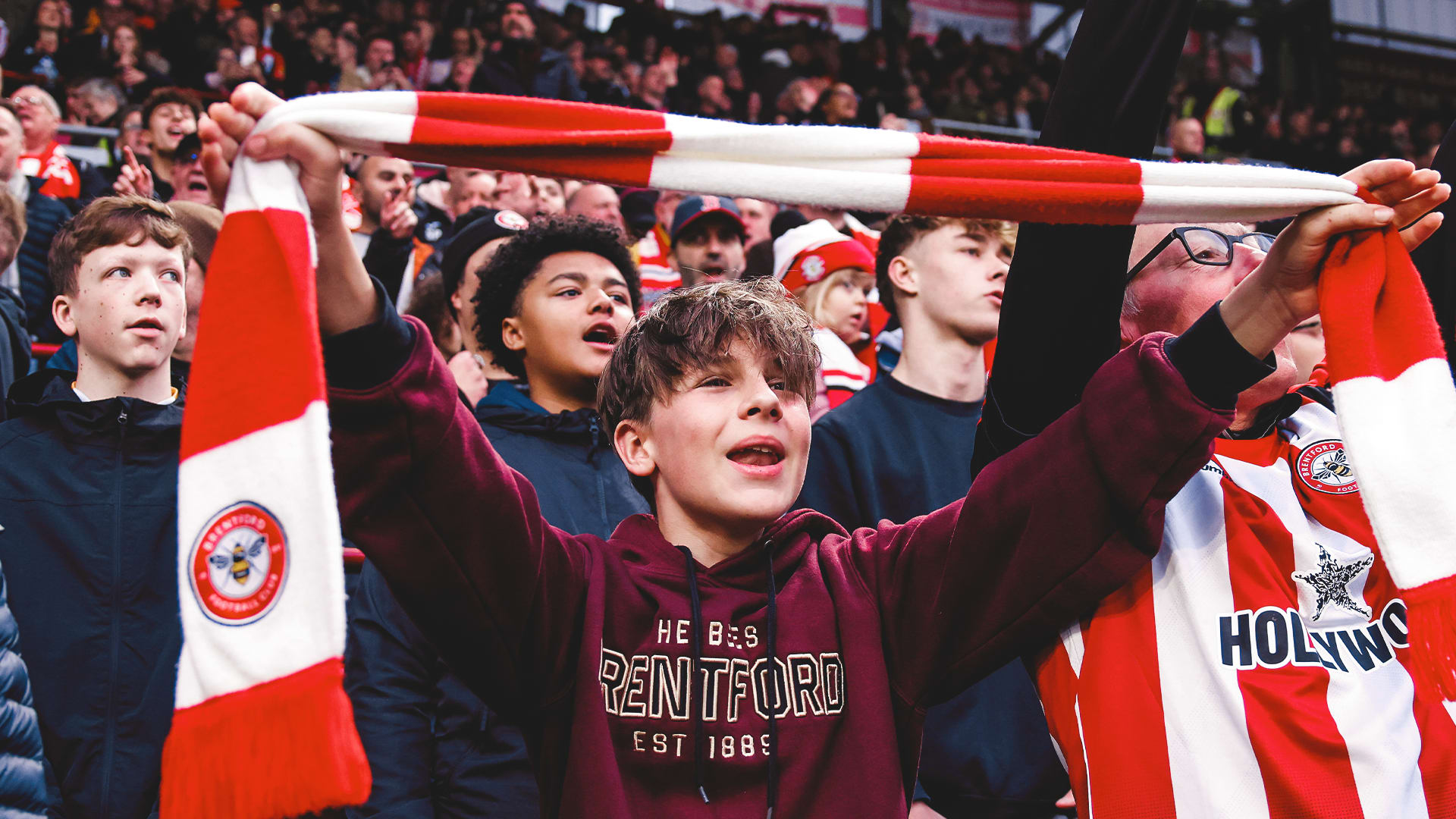
One answer is to reach people before their sporting habits have hardened. Brentford’s Gen10 scheme is a useful example because the £10 junior away ticket is only the mechanism, while the more interesting story is what happened around it. The club reported that junior away attendance increased by 35 per cent, more than 100 young supporters attended their first away fixture and more than 1,000 used the scheme overall. Crucially, more than 600 bought tickets on multiple occasions, suggesting that for a significant group the initiative did more than create a single cheap afternoon out.
That distinction matters. A discounted junior ticket is easy to judge on its immediate economics, particularly when clubs are under pressure to maximise revenue from limited capacity, but a child attending at eight or nine is not necessarily a £10 customer. If they enjoy the experience and return, they could still be attending at 18, 38 or 68. The relationship has to begin somewhere, and the clubs that take youth attendance seriously are creating the opportunity for habits, friendships and family rituals to form around them.
There is also a second audience hiding inside almost every junior initiative: the adult who has to bring them. A school visit, junior ticket or community programme can introduce parents to a club at exactly the same time as their children, including people who may never have independently considered attending. Audience development is rarely as neat as acquiring one supporter at a time, because supporters have an unusual habit of creating other supporters.
Geography helps, but proximity does not automatically create affinity. YouGov’s latest analysis of Premier League fanbases illustrates how varied the relationship between club and place can be. Brighton had the highest proportion of supporters living in their home region at 56 per cent, followed by Sunderland at 50 per cent and Nottingham Forest at 49 per cent, while several of the biggest clubs drew the majority of their support from much further afield.
For smaller clubs, the more useful thought is that living near a ground and identifying with the club are two very different things. There may be thousands of people within a short journey who know perfectly well that the club exists but have never encountered a compelling reason to go. Some already follow another team, some assume the standard will not interest them, others do not know what tickets cost or whether children will enjoy it, while plenty simply have no idea what the experience is like.
Dulwich Hamlet became an interesting example of what can happen when a club begins reaching beyond the traditional definition of its audience. Their rise at Champion Hill coincided with a concerted effort to connect with the surrounding community and make attending feel accessible to people who did not necessarily fit the conventional image of a non-league football supporter. The appeal was not simply cheaper football. It was a distinctive day out, rooted in a particular place, with a culture people could understand and participate in even if they had not spent the previous twenty years following the club.
That is an important distinction for any club sitting in the shadow of much larger neighbours. The proposition does not have to be that this is a cheaper or lower-level version of the football somebody really wants to watch. It can be something different: local, accessible, social and close enough to the pitch that the experience bears little resemblance to watching elite sport from the upper tier of a 60,000-seat stadium. The potential supporter may already like football. What they have not discovered yet is this version of it.
Basketball offers a slightly different lesson because its recent growth in Britain appears particularly strong among younger audiences. EY-Parthenon’s Sports Engagement Index found basketball climbing seven places in 2025, reaching 13th overall and sixth among 18-to-24-year-olds, with its growth driven particularly by social content and attendance at live events. An earlier edition found 57 per cent of basketball’s engagement base was aged 34 or under.
There is something useful for other sports in the way basketball can present itself. Somebody does not necessarily need a lifelong attachment to Manchester Basketball before deciding that a game looks like a good way to spend an evening. The music, players, crowd and entertainment can provide the initial reason to attend, with allegiance developing afterwards. Manchester Basketball’s ambition to make its players “locally famous” makes particular sense through that lens. Recognising a player from social media can be the beginning of the relationship rather than the consequence of already being a committed fan.
Football sometimes reverses that process, expecting the emotional investment to exist before the experience is purchased. For established supporters it does, but a new audience may need a different invitation. The initial proposition could simply be that there is live sport nearby, tickets are affordable, the atmosphere is good and your friends will enjoy it. Nobody needs to understand the history of the club before entering the building.
The broader UK sports audience suggests this kind of fluidity is becoming increasingly important. EY found significant recent growth not only in basketball but in engagement with women’s sport, with 35 per cent of followers of women’s football having started following within the previous two years and 66 per cent within five. Half of women’s rugby followers had begun following within two years. These are unusually young fan relationships, formed because major tournaments, greater visibility and better access gave people reasons to start paying attention.
Wrexham is the spectacular version of something that can happen on a much smaller scale. Welcome to Wrexhamintroduced millions of people to a club, city and group of supporters they previously knew little about, with some viewers moving from enjoying the programme to developing a genuine sporting attachment. The BBC recently spoke to Wrexham supporters in Norway, Dubai and Iceland, while the Norwegian Reds alone had grown to 440 members. Wrexham’s Supporters Federation now includes 25 groups, with others established around the world.
The obvious response is that Wrexham have Hollywood owners, an internationally distributed television programme and a story almost no other club could reproduce. All of that is true, which is why copying Wrexham’s tactics would be largely pointless. What is more transferable is the route by which the relationship formed. Many of these people encountered the characters, community and story before they cared deeply about the results. Over time, the football became meaningful because the people and place had become meaningful first.
The commercial consequences are substantial. The BBC reported that Wrexham’s turnover reached £33.3 million, with the majority of revenue coming from outside Europe and around half of retail income since the start of 2024/25 generated outside the UK. Yet the most interesting part of the story is not that international supporters buy shirts. It is that geographical distance no longer prevents somebody forming a genuine attachment to a club they did not inherit.
Every club has stories, although not every club tells them particularly well. There are volunteers who have given decades to an organisation, families who have occupied the same part of a ground for generations, players with unusual routes into the game and communities whose history is tangled up with the club’s own. Content can introduce those things to somebody before a ticket ever enters the conversation. Most people will simply enjoy the story and move on, but for a small number it can provide the first reason to care.
There is another potential supporter who is considerably less romantic but perhaps more common: somebody who would happily attend live sport if discovering it were easier. They may have no allegiance to the home team, no intention of checking a league website and no reason to know that a game is taking place a few miles away. The problem is not price, loyalty or even interest. It is discovery.
This is an area where sport behaves strangely compared with other forms of entertainment. If somebody wants to see a film, concert, comedy show or exhibition this weekend, there are established places to browse what is happening nearby. Live sport remains much more fragmented, particularly below the elite level. Fixtures sit across club websites, league pages and social feeds, which works perfectly well for the person who already knows what they are looking for and much less well for somebody who simply wants to watch something.
That is part of the thinking behind Discover in the Fanbase app, which allows people to see live sport taking place around them rather than beginning with a particular club. The distinction is subtle but important. Traditional ticketing begins with demand and helps somebody complete the transaction. Discovery tries to create the possibility of demand by showing them something they did not know was available.
For clubs, this audience will inevitably be less predictable than the traditional supporter base. Someone might attend because they happen to be in the area, because their usual team is away or because they fancied doing something different with their Saturday. Not everybody needs to become a lifelong supporter for that first visit to be worthwhile, but some will return, and no second visit can happen without a first.
There is a temptation when clubs talk about attracting new audiences to picture a younger version of the existing crowd. The assumption is understandable because today’s season-ticket holder was once somebody attending for the first time, but the evidence from across sport suggests future audiences may arrive through much less familiar routes. Basketball is finding younger followers through social content and live experience, women’s sport has converted major-event attention into large numbers of relatively new followers, Wrexham have built communities thousands of miles from north Wales, while clubs closer to home continue to find new supporters through schools, families, community work and affordable entry points.
None of this diminishes the importance of the people who have supported a club for decades. Audience development should not mean replacing existing culture with something designed for an imaginary new consumer, and clubs that chase new people while taking loyal supporters for granted are solving the wrong problem. The more interesting opportunity is to make the circle larger, finding ways for somebody unfamiliar with the club to enter without asking the people already inside it to become something else.
That requires a slightly different way of thinking about growth. Instead of beginning with the question of how to persuade supporters to buy another ticket, clubs can ask who lives nearby but has never attended, which children are encountering the club for the first time, who is engaging with its content without yet buying, and which people would enjoy the experience if only they knew it was happening. The answers will be different in Manchester, Dulwich, Brentford and Wrexham, because the communities and sports are different too.
The common thread is that people do not always need to care before they arrive. Sometimes the first job is simply giving them a reason to come, then allowing the place, the people and the experience to do something marketing cannot manufacture: give them a reason to care.