Football clubs have more history than they can realistically look after, but some of their supporters have spent decades preserving it. We look at how Sheffield Wednesday, Southend United, Derby County, AFC Wimbledon and Exeter City are working with fans to bring that history into their stadiums.
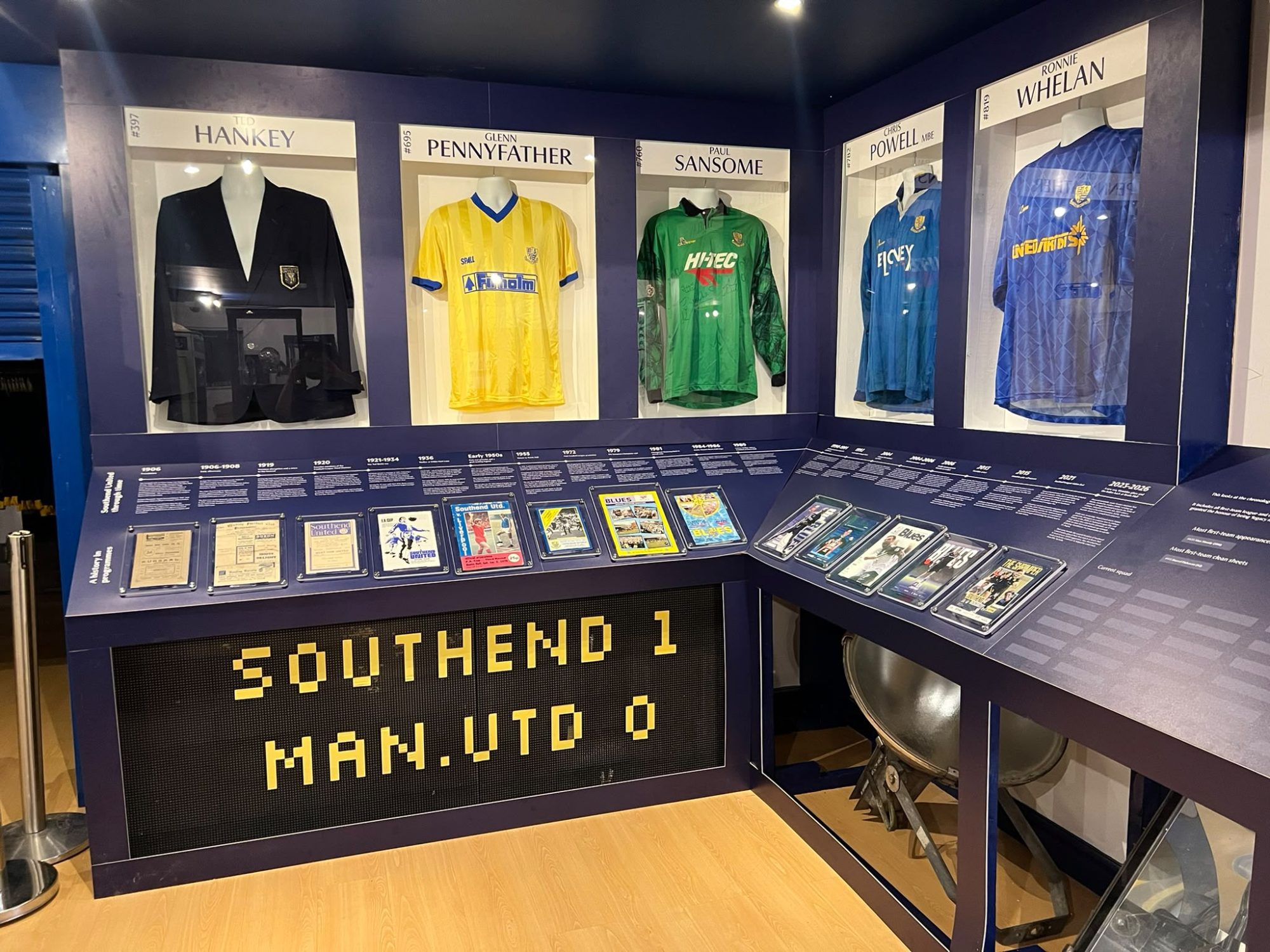
Football clubs have an enormous amount of history to look after. More than a century of shirts, photographs, programmes, trophies, newspaper cuttings and objects that might mean very little to somebody outside the game, but an awful lot to the people who were there. The trouble is, keeping track of it all takes time, money and expertise, three things that aren't always readily available to the people running a football club.
There are more immediate concerns, of course. Tickets need selling, sponsors need looking after, fixtures need promoting and stadiums need maintaining. At many clubs, the people responsible for those jobs are already covering several roles, and finding somebody to catalogue a collection of old photographs or establish the provenance of a shirt from 1978 is unlikely to make it to the top of the list. Meanwhile, somewhere in the stands, there might be a supporter who has spent the past 40 years doing precisely that.
Across the country, football fans have built remarkable private collections, often with little recognition beyond fellow collectors and supporters. They've rescued objects from skips, bought memorabilia from former players, tracked down shirts that have travelled halfway around the world and spent countless hours documenting their club's past. Increasingly, football clubs are finding ways to work with these people, bringing their collections into stadiums, hospitality areas and dedicated museums, and many of the arrangements are simple enough for a club of any size to adapt.
A football club's archive is rarely a neat, complete record of everything that has happened to it. Material gets lost when grounds are redeveloped, offices move or ownership changes. Former players and employees keep shirts, photographs and correspondence. Families inherit boxes of memorabilia without necessarily knowing what they contain. Other objects are sold, discarded or simply forgotten, sometimes long before anybody realises they might have been worth preserving.
Even when a club has retained a substantial collection, looking after it properly is a job in itself. Objects need identifying, cataloguing, storing and, in some cases, conserving. Photographs need dates and names attached to them. Shirts need to be authenticated, especially when there are several versions of the same design. If items are going on public display, questions of security, insurance and suitable conditions also come into play. None of this is glamorous work, but without it, an archive can quickly become a collection of objects that nobody knows very much about.
Larger clubs may have museums, dedicated staff and established archives, but elsewhere the responsibility often falls to somebody whose main job has little to do with heritage. Some collectors, meanwhile, have been building their archives for longer than the people currently running the club have been involved with it. They know which former player might have a certain shirt, which photograph shows a long-demolished stand and where to find information that never made it into an official record. The challenge for clubs is finding a way to make use of that knowledge, and to recognise the people who possess it, without assuming that their collections and expertise are automatically available for free.
At Sheffield Wednesday, an independent collection known as Wednesday Warehouse has been helping bring the club's history into Hillsborough. Historic shirts, scarves and other memorabilia have been loaned for display inside Hirsty's, one of the club's hospitality areas, giving supporters an opportunity to explore objects that would otherwise remain in private hands.
The man behind Wednesday Warehouse is Luke Earnshaw, who has spent more than 40 years collecting Sheffield Wednesday memorabilia. His collection runs into thousands of items, acquired through charity shops, car boot sales, former players and other supporters. Among his most treasured possessions is David Hirst's shirt from Wednesday's European away fixture against Kaiserslautern in 1992, which he managed to track down in Tokyo. There's a neat symmetry in Hirst's history now being on display in a space that carries his name, and it's the sort of object that might never have made its way back to Sheffield without somebody actively looking for it.
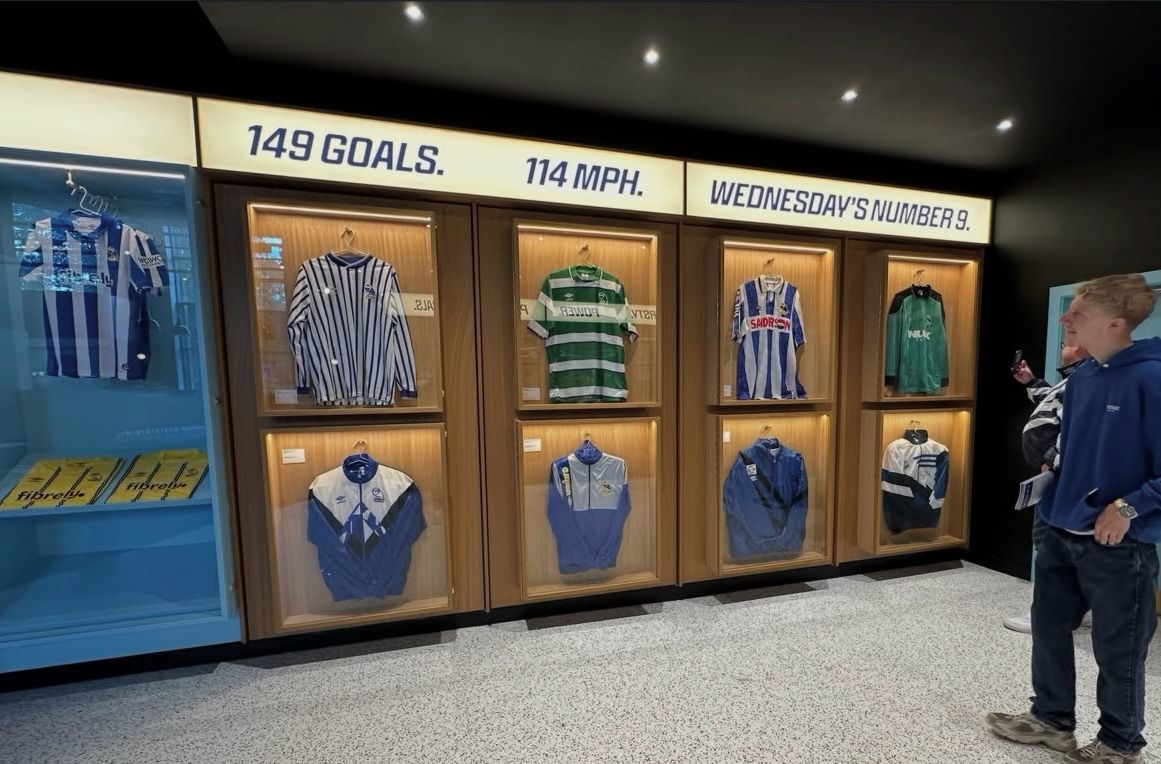
Earnshaw has spoken about the pleasure he gets from sharing his collection. Supporters visit, pull up a chair, look through old programmes and talk about the matches and players they remember. There's a social element to collecting that can get overlooked when the focus is entirely on the objects themselves. A shirt might be valuable because of its rarity or the player who wore it, but to somebody who watched that player every Saturday, it can mean something entirely different.
The collaboration at Hillsborough makes use of something Wednesday already has: a space where supporters and hospitality guests spend time before and after matches. Instead of relying entirely on its own archive, the club has invited somebody who has spent decades collecting its history to contribute. Wednesday gains access to objects and knowledge it might not possess itself, while the collector gets to share the collection with a much wider audience. It's a relatively simple arrangement, although the work that went into building the collection is anything but.
At Southend United, supporters have gone considerably further than lending a few objects for display. In August 2026, a museum opened in the ticket office next to the club shop at Roots Hall. It was created by volunteers from the Shrimpers Trust and, according to those involved, completed at no cost to the football club.
Part of the funding came from the ground itself. When Southend replaced the casings on their floodlight pylons, supporters were given the chance to buy the old ones, and all 88 sold within five hours of being listed online. The trust topped up the proceeds, while volunteers carried out the work needed to turn the space into an exhibition. Supporters were willing to spend money owning a small part of the ground's past, and that money was put towards making more of the club's history accessible.
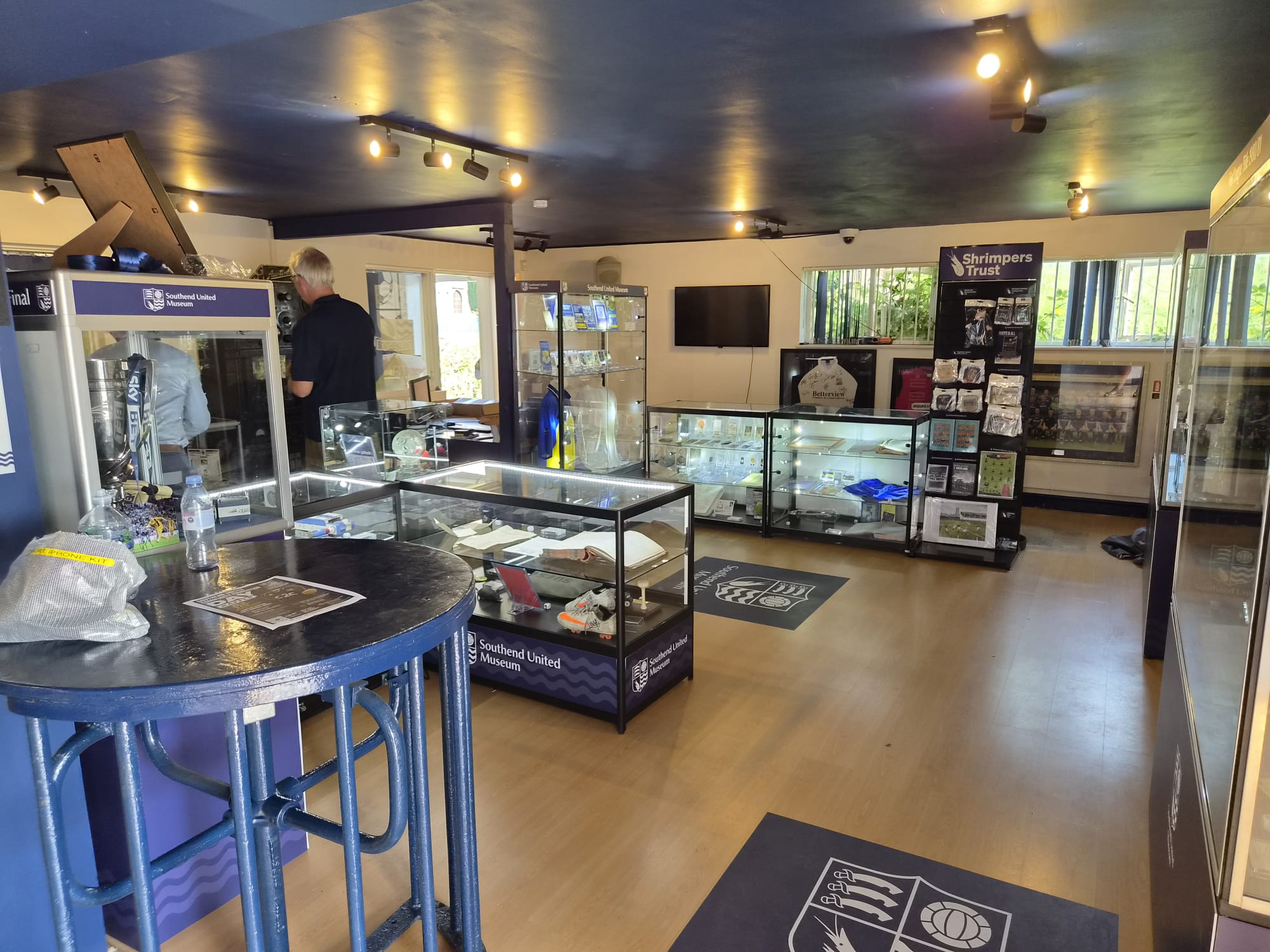
The museum is free to enter and opens before home matches, staffed by volunteers. Among its exhibits is a section of the old scoreboard commemorating Southend's 1-0 victory over Manchester United in the League Cup in 2006, a result that probably requires very little explanation to anybody who was at Roots Hall that night. By putting the museum next to the club shop, Southend has made it part of an area supporters already visit on matchdays, giving them another reason to arrive early without asking them to make a separate trip to an attraction elsewhere in town.
For clubs wondering what a heritage project might cost, Southend provides an unusually practical example of what can happen when supporters are trusted to organise something themselves, with the club providing the opportunity and the space.
Derby County have taken a different approach at Pride Park, where the club regularly changes the heritage displays inside Harrison's Hub. In February 2026, Derby launched an exhibition called Your Memories, inviting supporters to submit items from their own collections for a three-month display. The invitation was deliberately broad. Shirts, programmes, tickets, photographs and unusual memorabilia were all welcome, with the club selecting items to exhibit.
Previous displays had focused on specific periods in Derby's history, including the 1974/75 league title, the 1995/96 promotion season and the club's European adventures. Your Memories opened the process up to supporters, allowing the contents of the exhibition to be shaped by the people who had kept these objects, and giving the club a chance to discover material that might never have appeared in its own archives.

A permanent museum needs enough material to fill its space and a plan for looking after it indefinitely, whereas a rotating exhibition can work on a smaller scale, with each new display involving different supporters and telling another part of the club's story. Somebody who visited an exhibition about Derby's European campaigns might come back to see objects connected to their own first season following the club, especially if those objects have been contributed by fellow supporters.
For clubs with limited space, that's a realistic model. It doesn't require a purpose-built museum, just a suitable display area, somebody willing to coordinate contributions and clear arrangements for the objects being loaned, along with a relationship with supporters that turns each exhibition into a chance to discover more about the club's history.
At AFC Wimbledon, the relationship between the club and its heritage volunteers has developed into something more permanent. Wimbledon in Sporting History, better known as WiSH, is an independent organisation dedicated to preserving the history of Wimbledon football. Its work covers the club's different eras, including the original Wimbledon FC, the years at Plough Lane and the supporter-led creation of AFC Wimbledon.
When plans were being developed for the club's return to Plough Lane, the Dons Trust considered how a museum could be incorporated into the new stadium. A 2019 paper set out proposals for a space near the club shop, with WiSH providing much of the collection and taking a leading role in its operation. The museum subsequently became part of the stadium, and in January 2025 AFC Wimbledon announced its reopening following refurbishment work carried out by WiSH. It contains historic shirts, silverware and other memorabilia, with supporters able to visit before matches and as part of stadium tours.
For a club whose supporters played a central role in securing its future, the arrangement feels fitting. The museum gives that history a physical home at Plough Lane, close to where the original club spent so many years.
A supporter-led heritage organisation can also provide continuity through changes in club personnel, management and ownership. People working for a football club may move on after a few seasons, while volunteers and collectors can remain involved for decades. That continuity matters when you're trying to maintain an archive, because so much of the knowledge surrounding historical objects is never written down.
Exeter City offer another perspective on what preserving football history actually involves. The Exeter City Football Club Museum grew through collaboration involving the club, its Supporters' Trust and researchers at the University of Exeter. The project has brought together historical objects, documents, photographs and personal accounts, with supporters helping to catalogue material and record memories that might otherwise be lost.
It's easy to think of a football museum primarily in terms of what visitors see: shirts behind glass, old photographs on walls and trophies in cabinets. But much of the important work happens before anything reaches an exhibition. Somebody has to establish where an object came from, who owned it and what it tells us. Oral histories need to be recorded while the people who remember certain periods are still around. Documents need to be organised so that future researchers can find them. In some cases, the work is less about acquiring new material than making sense of what already exists.
Exeter's involvement with academic researchers shows how valuable outside expertise can be for clubs that couldn't realistically employ a full-time archivist or curator. It also raises a question about what football clubs choose to preserve. Trophies and famous shirts are obvious candidates, but the experiences of ordinary supporters are part of the history too. Their memories of travelling to matches, standing on old terraces or following the club through difficult periods can tell us things that official records rarely capture.
There are other examples around the country. Brentford worked with supporters' trust Bees United on an exhibition celebrating a century of the club wearing red and white, drawing on shirts and memories contributed by supporters. Middlesbrough's history has been explored through exhibitions of historic shirts, while projects at Grimsby Town and elsewhere have brought together photographs, memorabilia and personal accounts that might otherwise have remained scattered across private collections.
The approaches vary because the circumstances vary. Some clubs have suitable rooms inside their stadiums. Others have established heritage organisations, local museums willing to collaborate or collectors who have spent years building substantial archives. A permanent museum might be achievable at one ground and completely unrealistic at another, but there are ways to involve supporters without committing to a major construction project or taking on the running costs of a dedicated attraction.
The commercial team at a football club might recognise the value of celebrating its history but have no realistic way of starting a major archival project. It may not know what objects are available, how much they are worth or who has the knowledge to identify them. Supporters can help answer those questions, while the club can contribute space, visibility, access and practical support, making the material available to people who would otherwise never see it.
There are potential commercial benefits, although these shouldn't be overstated. A museum beside a club shop may encourage supporters to spend more time in that part of the stadium. A heritage display can make a hospitality lounge more distinctive. A temporary exhibition might provide a reason to visit the ground outside matchdays, especially if it's accompanied by talks, tours or other events that can be ticketed and promoted in the same way as a fixture. But not every heritage project needs to become a revenue-generating attraction, and preserving a club's history has value even when the immediate financial return is difficult to measure.
There are responsibilities involved as well. Supporters who lend valuable memorabilia need to know how it will be stored, secured and insured. Collectors deserve proper attribution, and volunteers should have a meaningful say in how their work is presented. These are often people who have invested substantial amounts of their own time and money, sometimes over several decades, and the most productive relationships recognise that expertise rather than treating it as an unlimited free resource.
At Sheffield Wednesday, that has meant bringing a private collection into an existing hospitality space. At Derby, it's an invitation for supporters to contribute to changing exhibitions. At Southend, volunteers have built a museum from the ground up. At Wimbledon, an independent heritage organisation has helped establish a permanent home for the club's past. Each involves a different level of commitment, which gives other clubs several possible starting points.
For some clubs, the person who knows more about their old shirts, photographs and programmes than anybody in the office is probably already coming through the turnstiles every other Saturday. It might be worth finding out what they've got.
One practical idea for your club, every fortnight. No spam, unsubscribe any time.
You've made the team sheet.
The next issue of the Clubhouse lands in your inbox soon.
Missed the target.
Check your email address and have another shot.
Read by club owners, commercial teams and ticketing managers.