Season ticket sales up 115%, revenue growth of 54% and an estimated £3.1 million in annual social and economic value. We explore how Leek Town FC are combining technology, commercial creativity and community engagement to build a football club that thrives beyond matchdays.
When Jon Eeles first became involved in running Leek Town FC, the club was attracting average crowds of around 250 supporters. Today, that figure is closer to 550–600, reflecting more than a decade of work to strengthen the club’s relationship with its local community.
Jon’s connection with Leek Town stretches back much further. A supporter for around 40 years, he originally began following the club to watch a childhood friend play, travelling up and down the M6 with their fathers and even making the journey to Wembley for an FA Trophy final.
After a career in private equity and mergers and acquisitions, Jon returned to working locally and became involved in the club’s administration. He eventually took over as chairman, a position he has held for approximately 12 years.
His professional background brought a particular focus to the club’s financial sustainability, but one of the most important decisions of his tenure had relatively little to do with selling tickets.
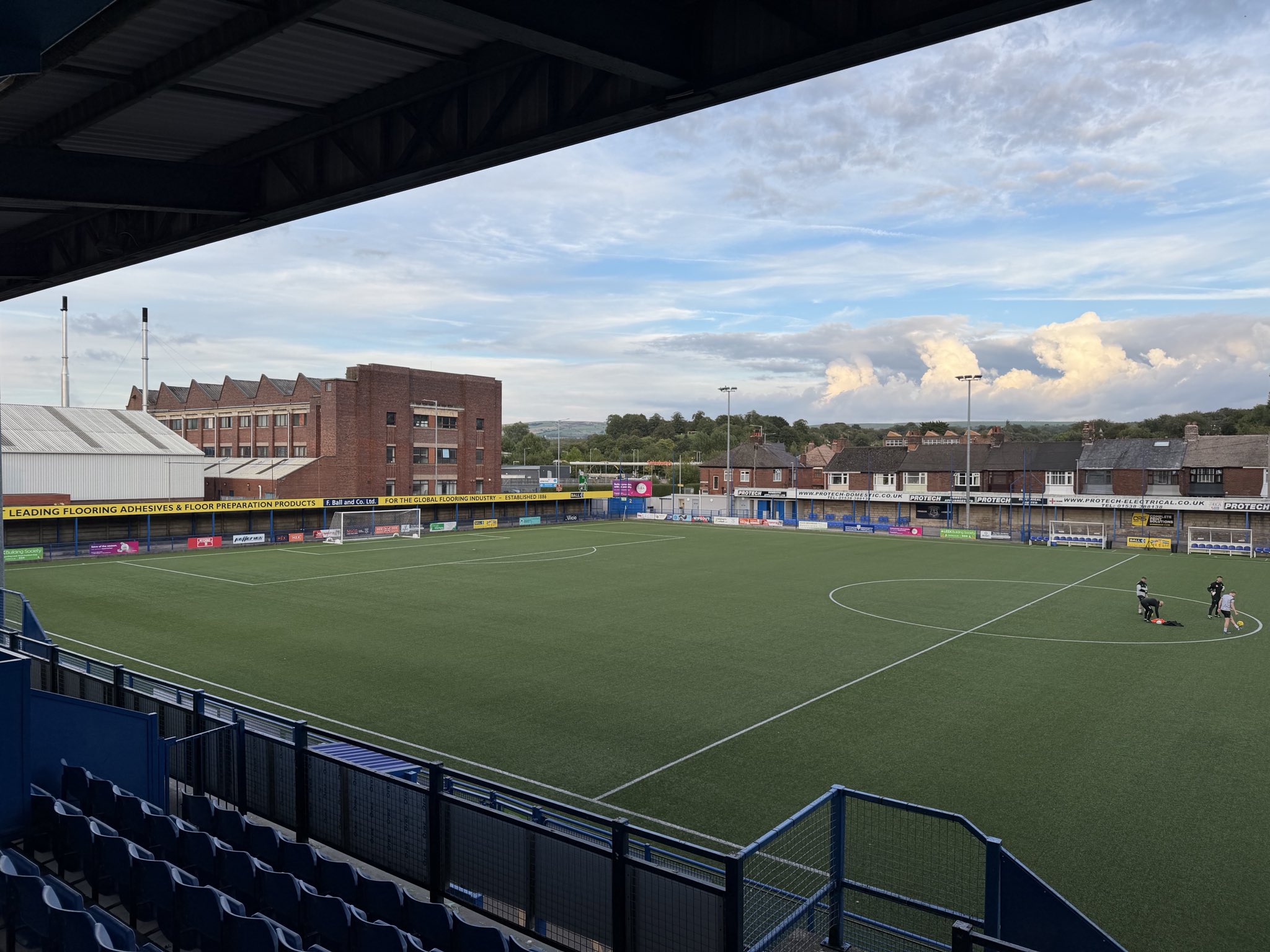
During the pandemic, Leek Town invested in converting their grass pitch to a 3G surface. The project wasn’t without difficulties, including a delayed delivery that disrupted the start of the season, but Jon believes it fundamentally changed what the club could offer. Before the installation, Leek Town had approximately six or seven junior teams. Today, that number has grown to 28 or 29, with the pitch accommodating training throughout the week and matches at weekends.
“Not everyone is a fan of plastic pitches, but they absolutely drive community usage. That’s been a big part of our story and I’m glad we did it.”
Jon Eeles, Chairman, Leek Town FC
The decision helped turn Harrison Park, now the F Ball Community Stadium, into somewhere people could spend time throughout the week, rather than simply somewhere to watch the first team on a Saturday afternoon. It also laid the foundations for a broader approach to running the club, one that places community participation alongside commercial growth.
As Leek Town’s attendances increased, so did the importance of making it easier for supporters to engage with the club. Like many non-league teams, Leek Town had historically relied heavily on cash transactions. The pandemic accelerated the move towards digital ticketing, with restrictions requiring clubs to manage attendance numbers more closely.
The club initially introduced online ticketing through another provider, but Jon felt there was an opportunity to make the experience simpler for both supporters and those working behind the scenes.
The move to Fanbase provided a more flexible system, allowing Leek Town to manage fixtures, experiment with different ticketing options and reduce the administrative work involved.
“For the back office, it’s a lot easier to set up fixtures and be a little bit more creative in what you can do.”
One particularly important feature has been guest checkout, which allows supporters to purchase tickets without having to create an account. For non-league clubs, where supporters often make decisions about attending matches at relatively short notice, removing that additional step can make a meaningful difference.
Jon believes the simplicity of the purchasing experience is one of Fanbase’s greatest strengths.
“You can buy a ticket while you’re standing in the queue. It’s so easy.”
The importance of that flexibility becomes particularly apparent for cup ties, play-off fixtures and other matches where demand is higher and clubs need to manage attendance more carefully. During the 2024/25 season, Leek Town recorded a 40% increase in digital ticket sales, demonstrating the growing role of online purchasing within the club’s matchday operations.
Leek Town’s recent commercial performance provides further evidence of the club’s progress. Between the 2024/25 and 2025/26 seasons, season ticket sales increased by 115%, while season ticket revenue grew by 54%.
Those figures reflect a period in which the club has continued to build its supporter base, improve its commercial operations and make purchasing tickets more straightforward.
The relationship between sales growth and revenue growth is particularly interesting. Although the number of season tickets sold more than doubled, revenue increased at a lower rate, illustrating why clubs need to understand both ticket volumes and the income those sales generate.
For Jon, however, the challenge isn’t simply to increase the number of people buying tickets. It’s to make sure the club can maintain those relationships, encourage repeat visits and introduce supporters to everything else Leek Town have to offer, and that requires an approach extending beyond the traditional matchday experience.
While ticket sales remain important, Leek Town have also begun measuring success in a different way. Through the FA’s Club Programme, the club has used a social value impact calculator to assess the contribution its activities make to the surrounding community.
The resulting figure is substantial: an estimated £3.1 million in annual social and economic value. The calculation considers factors including volunteering, youth participation and wellbeing, helping demonstrate the wider benefits of having an active football club at the centre of a town.
For Jon, the figure has become particularly useful when speaking to prospective sponsors and commercial partners.
“Our value to the local community is currently £3.1 million. That’s a really powerful number when you sit down with partners and sponsors, because they realise it’s not just about the first team.”
One example of that wider contribution is Leek Town’s partnership with a local college, which allows students aged 16 to 18 to combine academic qualifications with football development. The programme has grown from nine students in its first year to 37, with seven of the original nine progressing to university.
It is an example of how the club’s facilities can serve different groups throughout the week, while creating opportunities that extend well beyond football.
For businesses considering a relationship with Leek Town, these activities offer a different perspective on the value of sponsorship. The proposition is no longer simply about reaching spectators on matchdays, but about supporting an organisation that contributes to education, wellbeing and the wider local economy.
Perhaps the clearest indication of Leek Town’s changing outlook is how the club now thinks about its facilities.
For years, the focus had been on maximising revenue during home fixtures. Hospitality rooms, meeting spaces and other areas of the F Ball Community Stadium were primarily considered assets to be used on matchdays.
Jon now believes that approach overlooked a considerable opportunity.
“The opportunity is actually Monday to Friday and using those rooms.”
The club has been exploring an arrangement with its local Chamber of Commerce that could see one of its rooms used as a weekday business drop-in centre.
With meeting facilities, high-speed internet, parking and staff already available, the proposal would allow Leek Town to generate regular rental income from an existing asset. It could also introduce local businesses to the club, creating opportunities for new sponsorships, partnerships and other commercial relationships.
Fanbase has a potential role to play in managing bookings and supporting the wider range of activities taking place at the F Ball Community Stadium. The idea reflects a broader ambition to make the stadium useful throughout the year, rather than relying on the relatively small number of days when the first team play at home.
Jon is also exploring how Leek Town’s location near the Peak District could become a commercial advantage. Working with local organisations, the club hopes to develop opportunities around tourism, encouraging visitors to spend time in the town and potentially attend a football match during their stay.
It’s an initiative still in its early stages, but one that demonstrates how Leek Town are beginning to think beyond their traditional supporter base.
“Football clubs at this level have got to get out of the mindset of what they used to do, and it’s just about Saturday afternoons twice a month.”
The next challenge is finding ways to maintain relationships with people who might only visit the F Ball Community Stadium occasionally. Jon recognises that not every supporter will attend matches regularly. Some may live elsewhere, visit the Peak District a few times a year or discover Leek Town through a community event rather than football.
That doesn’t mean their relationship with the club has to end when they leave the stadium. The club is exploring how digital content, memberships and other experiences could help supporters stay connected between visits.
Fanbase already provides Leek Town with a platform to manage ticketing and memberships, while Jon is particularly interested in how additional content and integrations could create more value for supporters.
He also sees opportunities to grow the club’s digital audience and encourage more people to become part of its wider community.
For a club operating with limited staff and resources, being able to manage those relationships without introducing unnecessary administrative work will be particularly important.
Jon is candid about the challenges of running a non-league club, where a relatively small group of people often takes responsibility for everything from ticketing to communications. It’s why he places considerable importance on technology that’s straightforward to use and flexible enough to accommodate new ideas.
Leek Town’s recent growth is the result of several interconnected decisions rather than any single initiative.
The installation of a 3G pitch allowed the club to welcome more young players and community groups. Improvements to ticketing have made attending matches easier, while a growing focus on commercial activity is helping the club identify opportunities beyond football.
The results are encouraging. Season ticket sales have more than doubled, revenue continues to grow and the club is demonstrating the wider value it brings to the town. But Jon’s ambitions extend further.
He wants Leek Town to become a place where local businesses meet, young people develop, visitors discover the area and supporters maintain a connection with the club, whether they attend every match or only a handful each season.
Fanbase is helping support that ambition by providing technology that makes ticketing and commercial operations easier to manage, while giving the club flexibility to explore new opportunities.
For other clubs throughout the football pyramid, Leek Town’s experience offers a useful lesson. Sustainable growth doesn’t always begin with attracting more people through the turnstiles or increasing the price of admission. It begins with recognising the value of what a football club already has: its facilities, its relationships and its place in the community.
And finding more ways to make those assets work, seven days a week.
One practical idea for your club, every fortnight. No spam, unsubscribe any time.
You've made the team sheet.
The next issue of the Clubhouse lands in your inbox soon.
Missed the target.
Check your email address and have another shot.
Read by club owners, commercial teams and ticketing managers.