The Clubhouse
The Value of Yesterday: What Football Clubs Can Learn From Middlesbrough’s Legacy Game
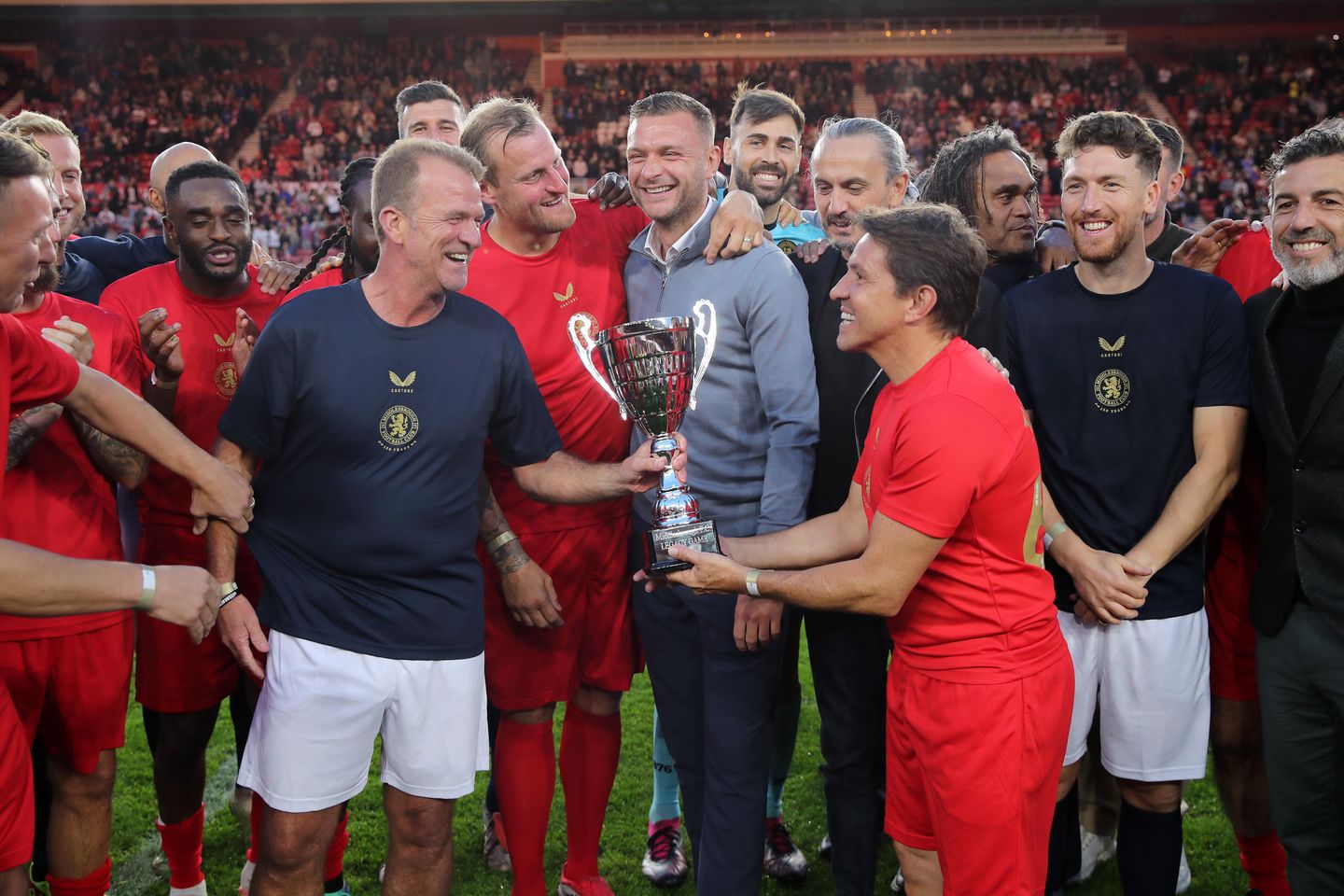


Almost 35,000 people turned out to watch former players celebrate Middlesbrough’s 150th anniversary. Beyond the nostalgia, there’s an interesting lesson in how football clubs can make more of the history they already have.
There aren’t many businesses that could persuade almost 35,000 people to turn up on a Sunday afternoon to celebrate their past. Football clubs, as we know, have always been slightly different.
On Sunday, Middlesbrough FC marked their 150th anniversary with a Legacy Game at the Riverside Stadium, bringing together almost 100 former players and managers from across the club’s history. The occasion attracted a sell-out crowd of just under 35,000, a remarkable number when you consider that Middlesbrough itself has a population of around 140,000.
There were familiar faces everywhere. Juninho, still adored on Teesside almost three decades after first arriving from São Paulo, received the sort of reception usually reserved for returning royalty. Mikkel Beck scored a hat-trick, Scott McDonald added two and the game finished 8-7, a scoreline that suggests defending wasn’t particularly high on anybody’s list of priorities.
But the football was almost beside the point. What Middlesbrough had created was something considerably more interesting than a conventional legends match, and there’s a lesson in it for clubs of every size.

The temptation when organising an anniversary event is to concentrate on the glory years. Bring back the trophy winners, invite the most recognisable names and build the occasion around the moments everybody remembers fondly.
Middlesbrough took a broader approach. Tony Mowbray, Lennie Lawrence, Aitor Karanka and Leo Percovich were among the familiar figures involved, representing different generations and very different periods in the club’s history. Some had been part of famous victories and memorable cup runs, while others were associated with more difficult seasons.
That distinction matters because football supporters don’t experience their clubs as a collection of highlights. They remember the terrible away journeys, the relegations, the players who gave everything in struggling teams and the afternoons when absolutely nothing went right.
A supporter who spent their teenage years watching Middlesbrough in the 1980s might have an entirely different relationship with the club from somebody who grew up watching Juninho, Fabrizio Ravanelli and the League Cup-winning side of 2004. Neither experience is more legitimate than the other.
By bringing so many generations together, Middlesbrough created an occasion that allowed supporters to celebrate their own personal histories alongside the club’s. As such, it wasn’t really about remembering when Middlesbrough were good. It was about remembering what Middlesbrough had meant to people throughout their lives.
There’s a reason football clubs have become increasingly interested in retro shirts, anniversary merchandise and heritage collections. Nostalgia has enormous commercial appeal, particularly in a sport where the emotional attachment to a particular era can last a lifetime.
But nostalgia alone doesn’t explain why almost 35,000 people would buy tickets to watch a collection of retired footballers. The more interesting explanation is that Middlesbrough gave supporters an opportunity to reconnect with something they considered part of themselves.
Football clubs have a remarkable advantage over most businesses in this respect. Their relationships with customers often begin in childhood, continue through adulthood and are passed between generations. A person might stop attending regularly, move away or lose interest in the current team, but their connection to the club can remain.
That creates an audience which isn’t necessarily visible in season-ticket figures or recent purchasing behaviour.
Someone who hasn’t attended a league fixture for five years might still be enormously interested in seeing the players they watched with their father in 1996. Another supporter might have little enthusiasm for the current season but happily pay to introduce their children to the people whose names they’ve been hearing around the dinner table for years.
Events like Middlesbrough’s Legacy Game offer clubs a different reason to bring those people back through the gates. And while the immediate value comes from selling a ticket, the longer-term opportunity is arguably more interesting.

A sold-out stadium is the most visible measure of success, but the potential value of a heritage event extends well beyond attendance.
There are hospitality packages to consider, anniversary merchandise, sponsorship opportunities and content that can be distributed across a club’s channels for weeks afterwards. Former players can participate in interviews, meet-and-greets and other experiences that supporters would struggle to access during a normal matchday.
More importantly, an occasion like this creates a legitimate reason for clubs to reconnect with people who might otherwise have little interest in their usual marketing.
Consider a supporter who attended the Legacy Game but hasn’t been to a competitive fixture for several seasons. That person has demonstrated something valuable: they still care about the club, even if their current relationship with it doesn’t involve attending every Saturday.
Understanding why they came back, what they enjoyed and what might encourage them to return again is potentially far more useful than simply recording another ticket sale. There’s an important distinction here between attracting an audience and developing a relationship with it.
The Legacy Game clearly achieved the former. The opportunity for Middlesbrough now is to understand how many of those attendees were occasional or lapsed supporters, and whether the event can become a starting point for bringing some of them back more regularly.
We shouldn’t assume that every supporter who attended an anniversary celebration is suddenly going to buy a season ticket. Many will have attended precisely because it was something different, and that’s perfectly fine.
But even if a relatively small proportion return for another fixture, purchase merchandise or attend a future event, the value of the occasion continues beyond the final whistle.
Of course, Middlesbrough have advantages that most clubs don’t. They’ve played at the highest level, appeared in European competition and accumulated generations of recognisable players. They also have a stadium capable of accommodating almost 35,000 people.
But the underlying idea isn’t dependent on any of those things. A National League club might celebrate the anniversary of a memorable promotion, inviting the players back for a fixture and building an evening around the stories of that season. A smaller community club might reunite a team that won a county cup 25 years ago, or invite former players and volunteers to a special matchday celebrating the people who helped keep the club alive.
The numbers will be smaller, but the emotional connection doesn’t have to be. In fact, there’s an argument that smaller clubs are particularly well placed to do this because the relationships are often more personal. Former players might still live locally, supporters might know them personally and the memories being celebrated belong to a relatively tight-knit community.
The commercial opportunity might be 300 additional tickets rather than 30,000, but for a club operating on modest margins, that can still be meaningful. There’s also an opportunity to think beyond anniversaries. Football clubs have an extraordinary archive of people, photographs, stories, shirts and moments that rarely receive much attention outside the occasional social media post.
Some of those stories could become events, exhibitions, merchandise collections or content series. Others might simply provide a reason to invite a group of supporters back to the ground. The important thing is recognising that history isn’t just something to document. It’s something clubs can actively use to create new experiences.

Football’s commercial conversation understandably concentrates on the future. Clubs want to sell more tickets, attract younger audiences, develop new partnerships and create additional revenue streams. There are always new technologies, platforms and ideas promising to help them do it.
Yet Middlesbrough’s Legacy Game offers a useful reminder that some of a club’s most valuable assets have been accumulating for decades.
They’re the former players who still mean something to supporters, the stories passed down between generations and the memories associated with particular moments in a club’s history.
None of those things appears neatly on a balance sheet, and their commercial value isn’t always easy to measure. But they represent something that most businesses would spend an enormous amount of money trying to create: a genuine emotional connection with their audience.
Middlesbrough understood that celebrating 150 years didn’t have to mean choosing the greatest 11 players or reliving the club’s most successful season. It could mean bringing everybody back, recognising the good years and the bad, and allowing supporters to celebrate the part the club had played in their own lives. Almost 35,000 people turned up because they wanted to be part of that.
There’s a lesson in there for every club, regardless of size. Sometimes the next great occasion doesn’t need to be invented. It’s already there, waiting somewhere in your history.