As the debate over Saturday afternoon's television blackout gathers pace, we look at why it exists, what the latest research says about non-league attendances and what clubs might stand to lose.

As the debate over Saturday afternoon's television blackout gathers pace, we look at why it exists, what the latest research says about non-league attendances and what clubs might stand to lose.
For generations of football supporters, Saturday afternoon has followed a familiar routine. The early kick-off finishes, the television goes off and thousands of people make their way to grounds across the country. By three o’clock, the Premier League has largely disappeared from British screens, leaving the afternoon to the supporters who have chosen to watch their football in person.
It’s an arrangement that feels increasingly peculiar in a world where almost everything is available on demand. A supporter in New York can watch a Premier League match that somebody living ten minutes from the stadium cannot legally see on television, and with more football broadcast than ever before, protecting a two-and-a-half-hour window every Saturday can look like a relic from another age. But the 3pm blackout was never really about the people watching the Premier League. It was designed to protect the clubs those people might otherwise be watching instead, and as the debate over its future gathers pace, the important question is whether it’s still doing that job.
The blackout is back in the headlines because English football’s next round of broadcasting deals is coming into view. The current Premier League, EFL and SPFL agreements all run until the end of the 2028/29 season, and Premier League chief executive Richard Masters has said the direction of travel is towards ending the restriction, with a decision expected within the next 18 months. In Scotland, the SPFL’s latest rights tender has invited bids to show every Premiership match live, including those kicking off at 3pm on a Saturday.
The Premier League’s current domestic deal already includes 270 live matches a season, up from 200 under the previous agreement, which leaves only around 110 fixtures unshown. Removing the blackout would effectively complete the job.
That prompted an intervention from an unexpected quarter in November, when Prime Minister Andy Burnham urged the football authorities to think carefully before making any change. “I would urge a bit of caution, because it does protect the income of lower league clubs,” he said. “If you have effectively wall-to-wall Premier League football at any time, it takes away perhaps the incentive to go and watch the Football League or non-league.” Burnham was clear that he wasn’t taking the side of viewers who want more football on television, saying he would “first of all want to protect the football pyramid”. It’s a position shared by the Football Supporters’ Association, which has highlighted the strength of attendances throughout the English pyramid and warned against making changes without understanding their consequences.
The restriction dates back to the 1960s, when Burnley chairman Bob Lord became concerned that televised football would discourage supporters from attending matches in person. The logic was simple: if supporters could watch a big game at home, why would they pay to attend a smaller one down the road?
Today it operates under Article 48 of UEFA’s statutes, which allows national associations to protect a period during which live football cannot be broadcast domestically. In England, that means no live football on television between 2.45pm and 5.15pm on Saturdays during the season. It isn’t a law preventing people from watching football, but a broadcasting restriction adopted by the game’s authorities to protect live attendances across the domestic game. For most of its existence the principle has gone largely unchallenged, because football at the top of the pyramid generates enormous broadcasting revenues while clubs further down depend far more heavily on people buying tickets, programmes, food and drink. The blackout, in theory, gives those clubs a little breathing room.
Football has changed enormously since Bob Lord’s time. Supporters now have access to hundreds of televised matches, highlights arrive almost instantly and illegal streams make the blackout easy to get around. The question is whether those changes have made the restriction redundant, or whether its original purpose matters as much as ever.
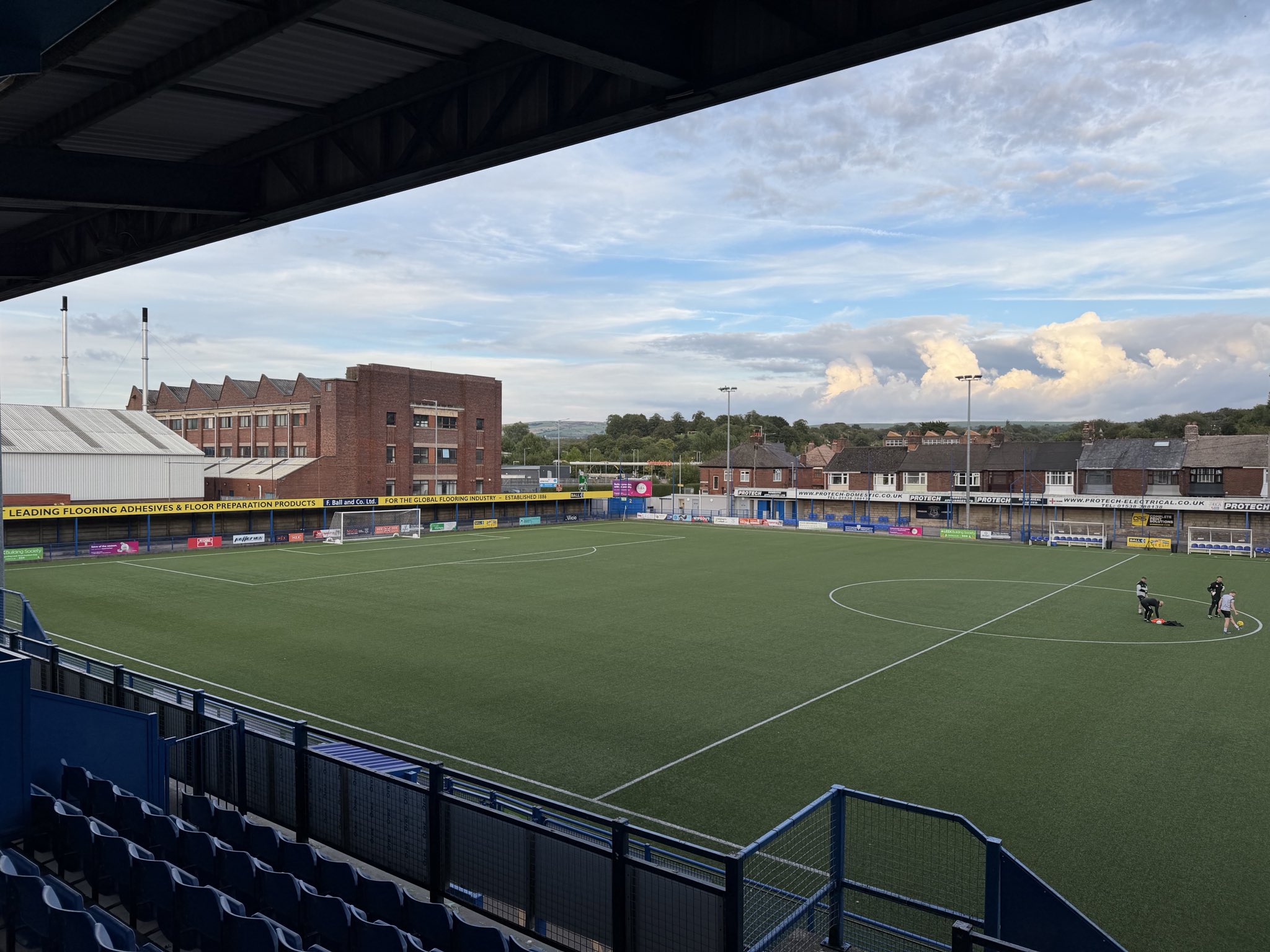
One of the most striking features of English football is how far down the pyramid substantial crowds continue. The National League regularly attracts attendances that would be considered impressive in professional competitions elsewhere in Europe, clubs several divisions below the Premier League can draw thousands, and even sides at the eighth or ninth tier can rely on hundreds of people turning up on a Saturday afternoon.
That isn’t normal across European football. Research published by the Economics Observatory in September 2026 found that average attendances in England’s fifth tier exceed 3,000, more than ten times the average at the equivalent level in Germany, and compare favourably with the third divisions of several major European leagues. It’s a remarkable achievement for a country whose top division dominates the global football conversation.
It’s also easy to underestimate what those crowds represent. A few hundred supporters might not sound significant next to 70,000 at Old Trafford, but for a small club they can be the difference between a healthy Saturday and a difficult one. Those supporters buy tickets, visit the bar, buy food and create the atmosphere that makes the club worth following, and they provide the regular income that allows clubs to employ staff, maintain facilities and plan ahead. None of that proves the blackout is responsible for England’s unusually strong attendances, since history, geography, population density and deep-rooted loyalties all play their part, but it does suggest there’s something worth protecting, and that any decision should consider more than the value of another Premier League television slot.
Much of the argument about the blackout has relied on assumptions about how supporters behave, and while the idea that televised Premier League football keeps people away from smaller clubs makes intuitive sense, intuition isn’t evidence. That’s why the work of economists Matthew Olczak, James Reade and Carl Singleton matters. Writing for the Economics Observatory, they examined attendance records from approximately 229,000 matches across the fifth to eleventh tiers of English football since the 2011/12 season.
Their analysis found that each additional Premier League fixture played on the same day was associated with a 0.8% reduction in non-league attendance. Across a full programme of ten Premier League matches, that would correspond to a fall of around 8%, and the researchers identified a further effect of around 3 to 4% when a nearby Premier League or Championship club was playing on the same day.
Those figures suggest the competition between clubs is real. A supporter who follows Manchester United but also enjoys watching their local non-league side faces no dilemma when United play on a Sunday, but when both clubs play on a Saturday afternoon, they have to choose between the bigger match, their local club or deciding that one afternoon of football is enough.
There’s an important caveat, though, and it’s one that should run through the whole debate. The research measures the relationship between Premier League fixtures and non-league attendances, not the effect of showing those fixtures on television. A supporter travelling to watch their Premier League club is unavailable to attend a smaller match whether or not the game is televised, and the findings don’t tell us precisely how many additional people would stay at home if every Premier League match became available to watch. That remains the significant unanswered question.
For a Premier League club, a fall of a few percentage points in attendance would barely register, because broadcasting and commercial income dwarf matchday receipts. Further down the pyramid, the picture is very different.
Consider a hypothetical non-league club attracting 1,000 supporters to a home fixture. If an extra televised Premier League match persuaded 50 of them to stay away, the club would lose 5% of its crowd, and at an average ticket price of £15, that’s £750 in admission revenue before any spending on food, drink or merchandise. Across 21 home league matches, a consistent loss of that size would amount to £15,750 in ticket revenue alone.
These figures are illustrative rather than a forecast, but they show why the issue matters to clubs with limited budgets and little financial protection. A smaller crowd doesn’t mean proportionately lower costs, because the club still has to open the ground, staff the turnstiles, provide stewarding and maintain its facilities. And the supporter who stays away isn’t just one fewer ticket sold, but somebody who isn’t spending money at the bar, bringing a friend or introducing their children to the club.
There are perfectly reasonable arguments for scrapping the restriction. The most obvious is that supporters should be able to watch their own team, and somebody who can’t afford to travel to an away match, or whose circumstances make attending impossible, might reasonably ask why they’re prevented from watching a fixture available to viewers around the world. Polling has repeatedly found more fans opposed to the blackout than in favour of it, with one YouGov survey finding opposition outweighed support by 52% to 25%.
The broadcasting landscape has also changed beyond recognition. Premier League matches are now regularly shown at 12.30pm and 5.30pm on Saturdays, Sunday and Monday fixtures are firmly established, and streaming has made simultaneous coverage of multiple matches technically straightforward. Illegal streams already allow determined supporters to get around the blackout, although their existence doesn’t tell us how many people use them, or whether those people would otherwise attend a local game.
Perhaps most importantly, it would be wrong to assume that non-league supporters are simply waiting for an excuse to stay at home. For many people, going to football is about far more than watching the best players available. It’s about familiar faces, the same pub, the same spot on the terrace and an afternoon somewhere that feels like theirs, and a Premier League match on television offers nothing like that experience. The blackout’s real effect depends on how many people genuinely weigh up the television against the turnstile. If those audiences rarely overlap, the restriction may be protecting fewer attendances than its defenders believe, but if they overlap substantially, removing it could create a serious problem for smaller clubs, and we don’t yet have a definitive answer.
The Covid-19 pandemic created an unusual period in which far more football was shown on television, and the Economics Observatory researchers found that the negative relationship between Premier League fixtures and non-league attendances was particularly pronounced during that time. It’s an intriguing finding, because it suggests the availability of televised football may influence whether supporters attend smaller matches.
But Covid was anything but a normal experiment. Capacities were restricted at various points, people’s willingness to attend public events changed and the football calendar was repeatedly disrupted, with some clubs playing behind closed doors while others admitted spectators. The findings are suggestive rather than conclusive, but they show the value of examining what supporters actually do instead of relying on predictions.
Whatever happens to the blackout, non-league clubs can’t decide the outcome of English football’s broadcasting negotiations, but they can make their own matchdays harder to give up. The clubs that hold onto supporters are generally the ones that make attending feel like more than watching a game, with quick entry, decent food and drink, and a sense that the club knows and values the people coming through the gate.
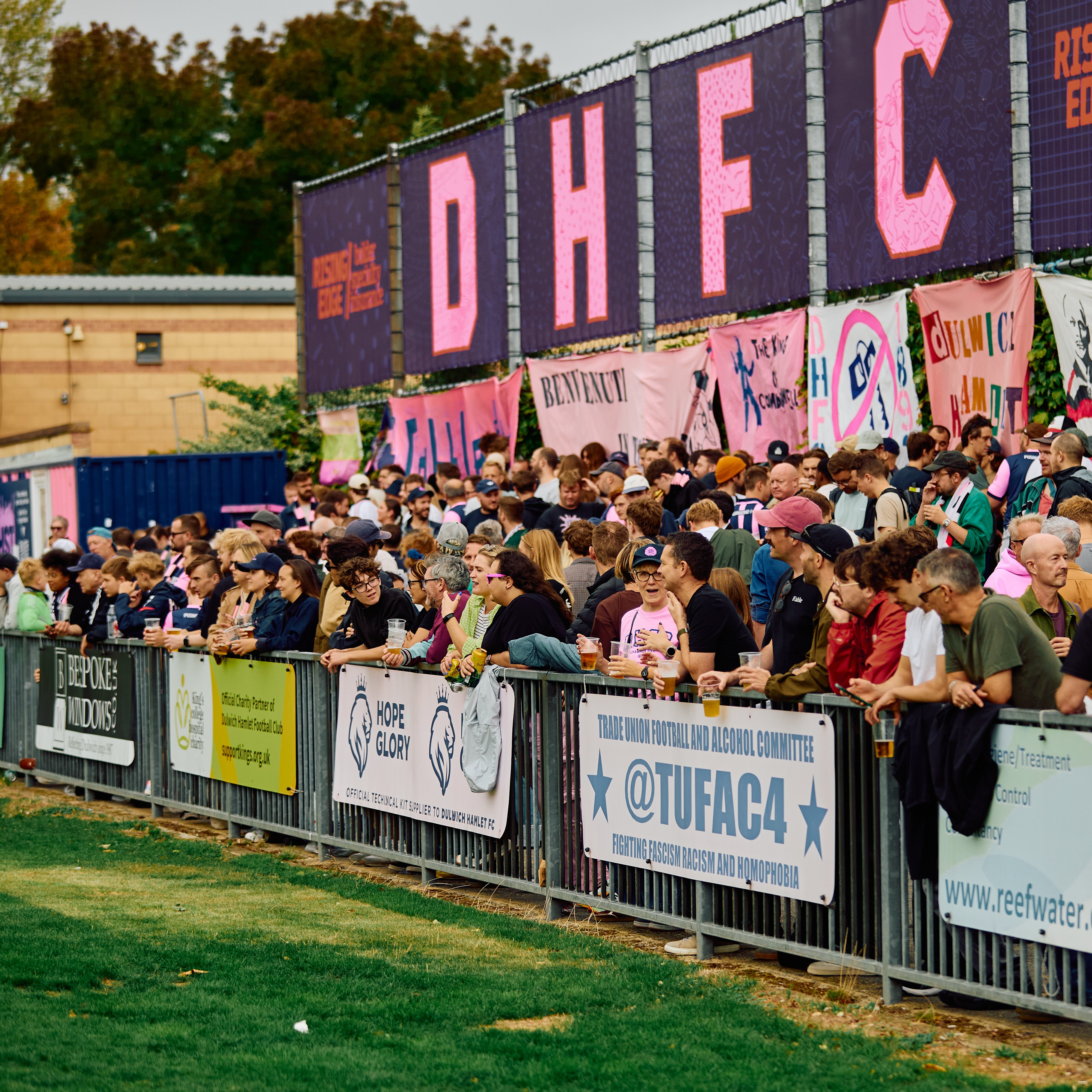
Some are already showing how. Hednesford Town grew season ticket revenue by 124% partly by giving loyal supporters an exclusive renewal window, while Dulwich Hamlet transformed matchday entry so that supporters are inside, happy and spending before kick-off rather than queuing in the park. Flexible options such as match bundles and memberships can help supporters who can’t commit to every game feel part of the club, and knowing who attends, and how often, gives clubs the chance to notice when someone starts drifting away. None of this removes the risk of more televised football, but a club with a strong relationship with its supporters is far better placed to withstand it.
The decision on the next broadcasting cycle gives English football time to examine the evidence properly before making a change with potentially far-reaching consequences. The Economics Observatory research is an important contribution, but more work is needed to understand how much of the effect comes specifically from televised football, how it varies by region and whether the impact differs across the pyramid. A non-league side in the shadow of a Premier League stadium faces different pressures from one whose nearest top-flight neighbour is 50 miles away, and the views of smaller clubs, whose finances are so different from those at the top, should carry real weight.
There may ultimately be a compelling case for change. Supporters’ expectations have evolved, the broadcasting landscape has been transformed, and a restriction introduced more than half a century ago shouldn’t be immune from scrutiny. Equally, English football has built something unusual, with thousands of people turning up every Saturday to watch clubs operating far beyond the financial comfort of the Premier League, creating a football culture that is the envy of much of the world. Whether the blackout deserves credit for sustaining that culture remains open to debate, but before English football decides that Saturday afternoon no longer needs protecting, it would be sensible to establish exactly what might be lost.