Scarborough Athletic are a supporter-owned club run almost entirely by volunteers, yet they’ve recently agreed one of the biggest commercial deals in their history. Marketing Director Chris Marson speaks to Fanbase CEO Alasdair Crawley about selling stadium naming rights, building on existing relationships and why the best sponsorships offer more than a name on a sign.

Scarborough Athletic turn over close to £1 million a year, attract average crowds of around 1,500 and have an audience that stretches well beyond North Yorkshire. Almost all of it is run by volunteers, including Chris Marson, a lifelong supporter with a background in print and marketing. He first offered to sort out the club’s inconsistent branding before being invited onto the board. “We’re a 100% fan-owned club,” he says. “It’s essentially close to a million-pound turnover business where we have one paid full-time member of staff, and then the whole rest of the operation’s run on volunteers.”
It’s a set-up that will be familiar to plenty of clubs further down the pyramid, where ambition tends to run well ahead of the resources available to deliver it. That makes Scarborough’s latest commercial deal all the more interesting. The club have sold the naming rights to their stadium to Moneyweb, a local financial services business, and the ground is now the Moneyweb Stadium. The sponsor wasn’t a new name found through a tender or a cold approach, though. It was a business that had been backing the club for more than five years.
For Chris, the size of the agreement matters less than what the relationship has become, with Moneyweb now actively helping Scarborough find other sponsors. That raises a question for clubs that spend much of their limited time chasing new commercial partners: are they making enough of the ones they already have?
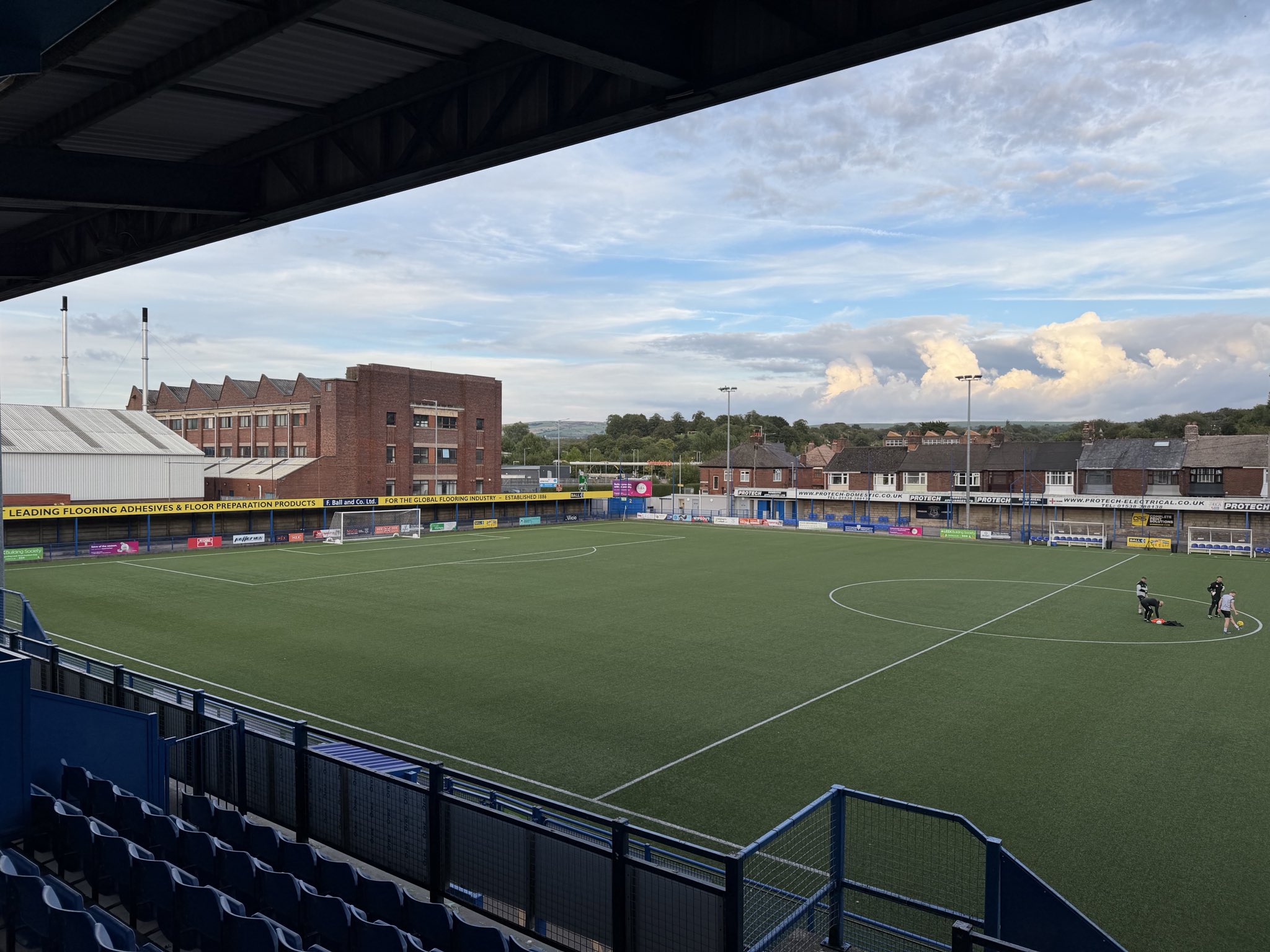
Scarborough’s stadium is owned by the local council, with the club paying rent to use it. The council originally sold the naming rights to a local theme park, but when that deal expired, it put the rights out to tender and “didn’t get any nibbles”. The ground had been without a commercial name for two or three seasons.
At the same time, the club’s own success was adding to its costs. Scarborough had to play away from home last season while structural work was carried out beneath the pitch, and their rapid rise to the National League North meant the new surface had to meet a much higher standard. “We’ve progressed quicker than anyone anticipated, and we’re now having to play on a FIFA Pro level of pitch, which means it’s a lot more expensive,” Chris says. “So in a nutshell, our rent’s gone up.”
The Board saw a way to tackle one problem with the other. Scarborough asked the council whether the club could take over the naming rights and use the income to help cover the higher rent, and given that the council’s own efforts had come to nothing, the conversation was short. “A couple of quick emails sorted that part out,” Chris says.
With an asset to sell, Scarborough didn’t launch a formal tender or start cold-calling local businesses. Instead, they emailed the companies already sponsoring the club. “We didn’t really tender, we just reached out to people we had existing relationships with,” Chris says.
Moneyweb were quick to show interest. The business had sponsored Scarborough for more than five years, supporting season ticket passes, advertising boards and half-time games, and Chris had previously handled marketing for its founder, Paul, before he became involved with the club. Moneyweb had grown considerably in that time and wanted to do something bigger. They had initially been interested in the front of the shirt, but Scarborough already had home and away agreements in place, so the naming rights arrived at exactly the right moment.
“I’d always start with existing sponsor lists before cold outreach.”
Chris Marson, Marketing Director, Scarborough Athletic
Chris thinks many clubs overlook the potential that already exists on their sponsor list. “I’d always start with existing sponsor lists before cold outreach,” he says. “There’s other sponsors who have maybe got the standard groundboard, but there’s other ones that are itching to do more. That relationship’s already there, and they’ve already helped you in previous years.”
An existing relationship doesn’t remove the need to make the case, and Chris built Scarborough’s around reach rather than attendance alone. Crowds average around 1,500, which he believes can grow, and the club have around 20,000 followers on Facebook, with social media impressions running into the millions and year-on-year growth on YouTube.
The audience also stretches further than most clubs at this level could claim. A Dutch podcast adopted Scarborough last season, and around 500 Dutch supporters have since become members, each holding a share in the club. A number have even travelled over to watch matches.
Chris also points out that a stadium name appears on far more than the signage, from match highlights and manager interviews to almost everything the club publishes. “It’s actually hard to quantify, because it’ll be across absolutely everything,” he says. He and Paul went through those figures together, and for Chris, they confirmed what both sides already believed. “The numbers back up what we’re all thinking, so it puts it into no-brainer territory.”
The structure of the agreement is particularly interesting. The sponsorship fee rises every year, reflecting the club’s ambitions, and Moneyweb pay each year in advance. “Annual payment upfront is massive if the business can do that,” Chris says. “It helps with cash flow for the football club.”
Both sides were also clear that they wanted more than a name. “We wanted to approach it, and so did Paul and Moneyweb, as a partnership and not just a name,” Chris says. Protecting the club’s identity was part of that, and the branding reads “Moneyweb Stadium, home of Scarborough Athletic Football Club”, with the club’s badge included. “What’s been key for me is protecting the club’s name and the club’s badge,” he says. “It’s not just out-and-out plastering a sponsor’s logo everywhere.”
The most distinctive element is a fee-sharing arrangement linked to Moneyweb’s financial advice services. Supporters who use Moneyweb receive a third off their advice fees, a third goes to the club and Moneyweb retain the remaining third. It gives the club another potential income stream and the sponsor a direct route to Scarborough’s supporters, and it means both sides have a reason to keep working on the partnership long after the announcement.
“Moneyweb have actually become a sidearm of our commercial team.”
Delivering on that arrangement has meant thinking carefully about how supporters actually behave on a matchday. “You’re not going to be stood in the burger queue thinking, I’ve got pension pots all over and I’m due to retire in fifteen years,” Chris says. Instead, the club have kept it simple, handing out flyers at home games and placing QR codes at busy points around the ground, so supporters can leave a couple of details and Moneyweb can follow up later.
Some of the messaging has been more imaginative. The Boro Gates, the only feature of the old ground to have moved to the new one, still carry the original club’s name on the outside, while the side facing into the stadium now reads “some things are worth protecting”, linking into Moneyweb’s financial planning services. Moneyweb will also speak at the club’s annual sponsors’ evening, which brings around 100 businesses into the same room.
“You’re not going to be stood in the burger queue thinking, I’ve got pension pots all over and I’m due to retire in fifteen years.”
In return, Moneyweb have begun opening doors for Scarborough, with introductions made before the signage had even gone up. “Moneyweb have actually become a sidearm of our commercial team,” Chris says. “They’re now helping to refer us to businesses we haven’t had anything to do with in the past, and that involves potential partnerships from out of town as well, which is an even bigger win.” For a club with one full-time employee, that’s a way of expanding commercial reach without expanding the payroll.
Not everything has gone smoothly, though. The club assumed the planning permission for the stadium’s original external signage was still valid, only to find it wasn’t, so the inside of the ground has been rebranded while signage outside goes back through planning. Chris now advises other clubs to think more broadly about landlord sign-off, noting that when “the public and private sector have to cross over, they do operate differently and work at different paces”.
Scarborough were more deliberate about the announcement itself. “It was important that we got the press releases out and controlled the narrative before signage started appearing,” he says. “We had a lot of mock-ups, but we didn’t share any with the press release. We said no, we’ll follow up with real photos when it happens.”
The agreement is still new, and its full value will depend on how well both sides deliver on what they’ve promised. But Scarborough’s experience already suggests that an existing sponsor can offer considerably more than an annual payment and a logo on an advertising board. Chris believes the principle applies to every commercial relationship a club has, however large or small. “Everyone has to win out of it, the supporters, the football club and the sponsor,” he says. “Whether it’s a groundboard or stadium naming rights, I think everyone has to win in equal parts for that to work properly.”
One practical idea for your club, every fortnight. No spam, unsubscribe any time.
You've made the team sheet.
The next issue of the Clubhouse lands in your inbox soon.
Missed the target.
Check your email address and have another shot.
Read by club owners, commercial teams and ticketing managers.