A shirt with a genuine story behind it can reach new audiences, generate revenue and build goodwill that a conventional marketing budget cannot. Cwmbran Celtic, Grimsby, Cambridge United, Leyton Orient, Newport County and Bohemians show how.
When Fontaines D.C. walked onto the main stage at Reading Festival in August, frontman Grian Chatten was wearing the green and white hoops of Cwmbran Celtic, a semi-professional football club from South Wales. Across the chest, where you might ordinarily expect a local business or a betting company, was the name of Scottish post-rock band Mogwai.
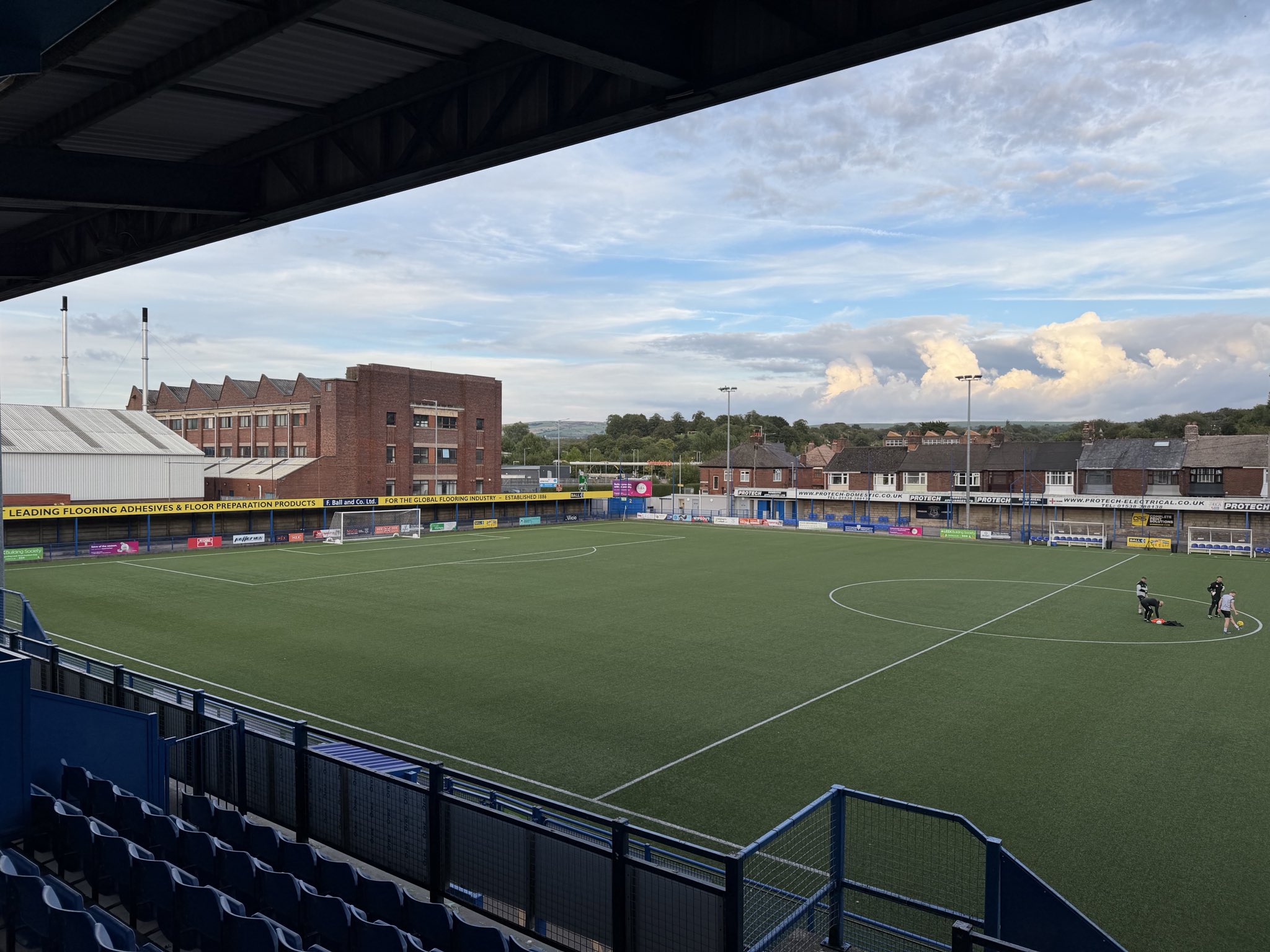
It was an unlikely sight, even by the occasionally peculiar standards of football shirt sponsorship. Cwmbran Celtic had worked with four independent bands on their 2026/27 kits, giving Mogwai, Super Furry Animals, Panic Shack and Loose Articles a place on the front of the shirts, with 10% of sales going to Music Venue Trust. Chatten's appearance wasn't part of a marketing campaign. The club hadn't arranged for him to wear the shirt and, like everyone else watching, were surprised to see him on stage in it. Within days, pre-orders had almost doubled.
It is an unusually vivid story, but it points to something happening across the game. A growing number of clubs, many of them well outside the top tier, have worked out that a football shirt can do far more than clothe a team, reaching people who have never watched a match and giving existing supporters something worth talking about.
For most of football's history, the kit release followed a predictable pattern. Home shirt, away shirt, occasionally a third. Release the photos, put them in the club shop, hope supporters buy one before the season ends and the design is retired. The shirt was stock. It was something to be managed rather than something to be built around. That has changed considerably, and the clubs leading the change are not the ones you might expect.
The standout kit story of the summer begins in Lincolnshire, which is a sentence that might surprise a few people but maybe shouldn't.
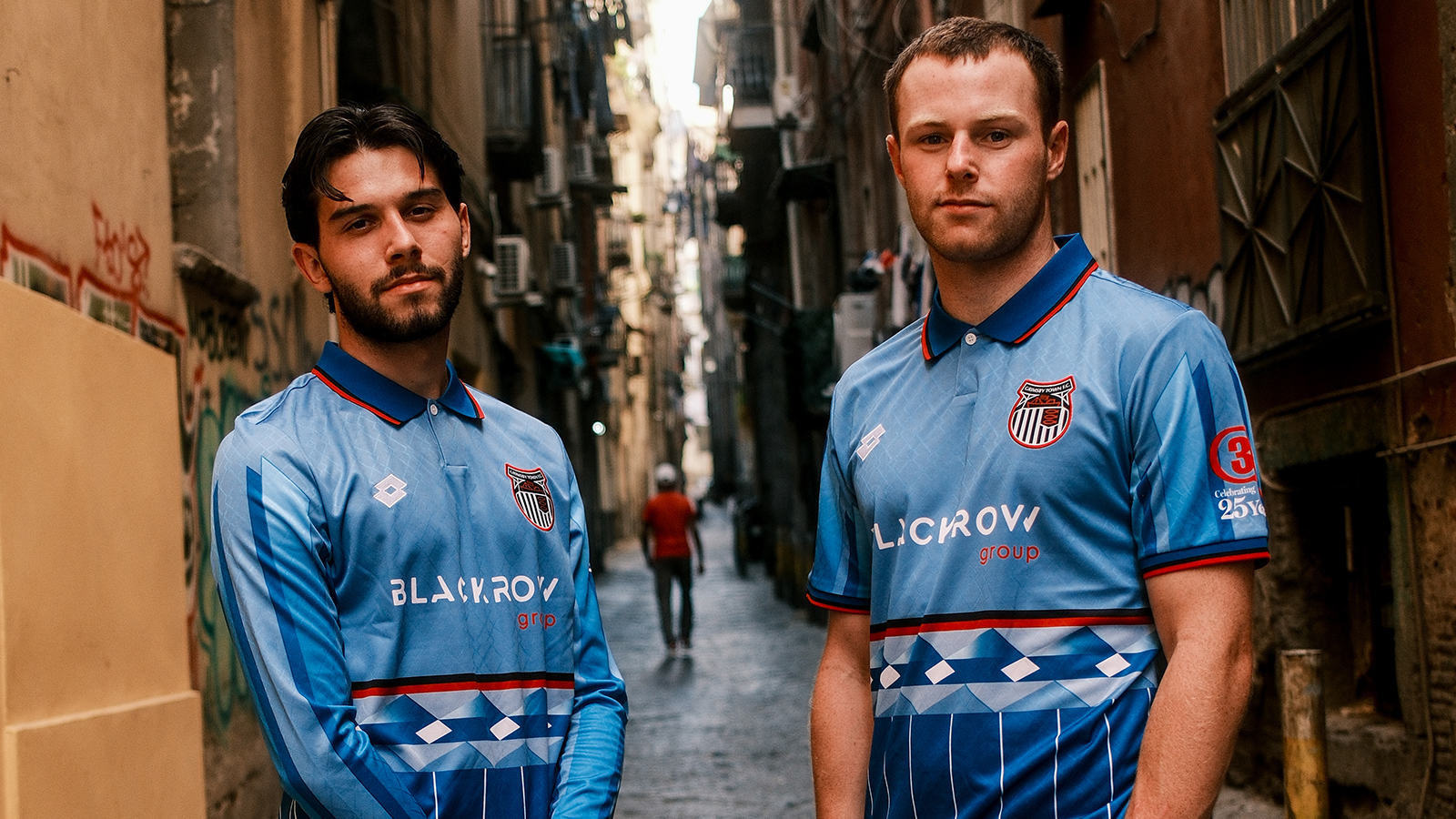
Grimsby Town's new Lotto away shirt for 2026/27 is a recreation of the light blue design the club wore in 1996/97, almost identical to the template AC Milan wore at the same time, with Roberto Baggio, George Weah and Paolo Maldini among the iconic names who appeared in virtually the same shirt. Three decades later it returns to Blundell Park through Lotto's new partnership with the club. The launch film was shot on the streets of Naples, with players Cameron McJannet and Geza David Turi modelling the shirt among scooters, markets and the everyday life of southern Italy. It went viral on social media, attracting national coverage and hundreds of thousands of views, and demand for the long-sleeved version was so strong that it sold out within days.
But the thinking behind it is more interesting than simply producing a striking design. Grimsby have spent several seasons deliberately looking into their own history for ideas, and their return to Lotto was not simply a technical-supplier decision. The Italian brand made some of the club's most fondly remembered kits between 1996 and 1998, and Grimsby's marketing team have spoken openly about using the club's archive and the manufacturer's history to create products that genuinely mean something to supporters. As Head of Marketing Jack Johnson puts it: "We should be unapologetically Grimsby, because we can't be anyone else." The connection between the town and Italy runs deeper than a template: the Dock Tower, standing over the docks since 1852, was directly inspired by Siena's Torre del Mangia, and during the 1990s Grimsby's food industry produced more pizzas than anywhere else in Europe.
The commercial effect of this approach has been building over several seasons. In 2024, Grimsby's new home shirt sold almost 1,800 units in its first 18 days. The following summer brought record first-day sales for another heritage-inspired home shirt. Their 2025/26 away shirt, whose launch campaign brought back former Italian midfielder Ivano Bonetti, eventually sold more than 10,000 units, the best-selling shirt in the club's history and more than there are seats at Blundell Park. By early October the 2026/27 shirts were already approaching that record, with additional stock arriving to meet demand. The market for a Grimsby Town shirt is clearly no longer restricted to the people who attend Grimsby Town matches, and that changes how a club can think about retail entirely.
“Ultimately, it’s about making products people genuinely want to wear, not just because they support the team, but because they like the design and what it represents.”
Jonathan Jones, MEYBA
It is also worth looking at what sits behind the design. This summer Grimsby launched a new online shop, making it easier for supporters around the world to buy, and encouraged customers to create accounts so the club can tell them about future releases. The investment in design has been matched by investment in the infrastructure needed to sell it, which is the part smaller clubs most often overlook.
Cambridge United have been exploring similar territory in a different way, using the history and identity of Cambridge itself as the design brief for a series of kits that have earned consistent praise well beyond the football shirt community.
A third shirt took inspiration from Reality Checkpoint, the famous lamppost on Parker's Piece. Another celebrated the discovery of DNA in the city, with double-helix detailing and a reference to Francis Crick's announcement that he and James Watson had found "the secret of life." The club also worked with the Fitzwilliam Museum and youth charity Romsey Mill on a limited shirt inspired by the work of British-Nigerian artist Joy Labinjo.
In October 2026, the club went further with a shirt celebrating Syd Barrett, the Cambridge-born founding member of Pink Floyd. Created with Barrett's estate, the design referenced Shine On You Crazy Diamond and the artwork of his solo album The Madcap Laughs. It was released to coincide with World Mental Health Day, with a proportion of replica sales and the proceeds of a match-worn shirt auction supporting mental health initiatives.
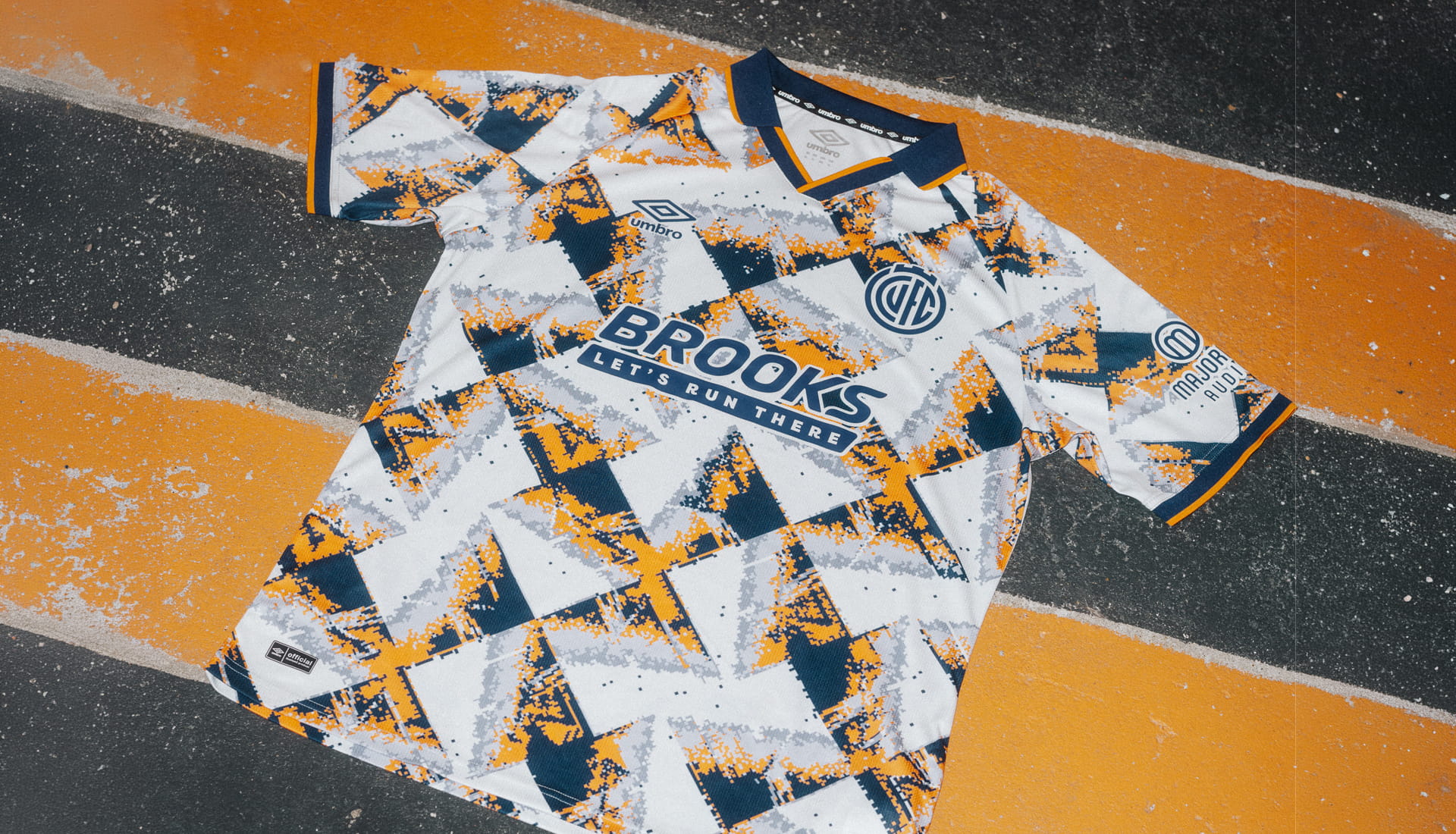
None of those ideas could be lifted and applied to another football club, and that is precisely the point. The shirt becomes another place where Cambridge United can talk about Cambridge. A supporter buying it is not only buying the colours of the team. They are buying references to their city, its history and the things that make it distinctively home. A Pink Floyd fan might have little previous interest in Cambridge United, but a shirt celebrating Syd Barrett gives them a reason to discover the club.
The commercial results have followed. Cambridge reported a 25% increase in shirt sales between 2022/23 and 2023/24 after beginning their relationship with Umbro and Kitlocker, with the opening two weeks of the following season setting another club record, and Chief Executive Alex Tunbridge pointing to the national and international attention the designs had attracted. There is no need to overcomplicate what is happening. Football supporters like buying things connected to their club. Give them better things with better stories behind them and more of them will buy.
The beginning of Leyton Orient's five-year partnership with MEYBA shows how manufacturers themselves are beginning to recognise the opportunity.

The revived Barcelona sportswear brand has positioned its relationship with Orient around bespoke design, heritage and East London identity rather than simply supplying a template with a badge applied. MEYBA describes Orient as its flagship football partnership globally and has committed to developing match kits, training wear and travel collections rooted in the club's history, culture and community.
One of the first products of that partnership was a shirt made exclusively for Forever Orient members, featuring the names of the members themselves woven into the design. It is difficult to think of a more literal example of merchandise becoming fan engagement. The supporter is not being sold another version of the club shirt. Their name becomes part of it.
The 2026/27 away shirt then went further back into Orient's history, drawing on the earliest Clapton Orient kits while commemorating William Jonas, Richard McFadden and George Scott, three Orient players killed during the Battle of the Somme. Product, history and storytelling occupying exactly the same space, and doing it in a way that only Leyton Orient could.
MEYBA's Jonathan Jones told us: "Working with Leyton Orient has been about much more than just designing and supplying kits. It's about understanding the club, its history, its supporters and its connection to the local community and wider East London area, and making sure that comes through in what we create.
One of the things we've really enjoyed is how open the club has been to us pushing boundaries, whether that's with the designs, the wider product range or how we approach launches and activations. They've been really open to trying different things and thinking beyond the traditional football shirt launch, which has given us the freedom to be creative and bring different elements of culture into what we do.
We see football shirts as much more than just matchday kit. They're a big part of a club's identity and something supporters want to wear with pride, but there's also an opportunity to connect with people beyond the traditional football audience. For us, that's about bringing together football, fashion, music and local culture, while connecting with the community and creating something with genuine commercial value"
Newport County's approach to kit design has consistently demonstrated how far a shirt built around genuine local history can travel.

Their collaboration with Athletic Club Bilbao told the story of the Basque children evacuated to South Wales during the Spanish Civil War, with 56 of them housed near Newport in Caerleon. Their names, and those of the adults who cared for them, were incorporated into the design itself. The shirt connected Newport and Bilbao through something that had happened almost ninety years earlier, giving existing supporters a piece of their area's history while putting Newport County in front of an Athletic Club audience many times larger than their own. Athletic themselves described the collaboration as relating to two of their club's fundamental ideas: identity and memory.
The relationship did not end at launch. The Welsh Government later presented one of the shirts to Athletic Club during a visit to the Basque Country. A walking football team from Bilbao subsequently travelled to Newport after learning about the story through the collaboration. That is a remarkable return from something that, in the simplest possible terms, began as an away kit.
Neal Heard, the creative director and football shirt historian behind the release, said: "I've been surprised how many Newportonians have said 'we never knew about it'. For me, Wales forgets some of the good stuff it's done and how it connects to the world. I love this story and thought we should bring attention to it - how can we bring it up to the modern day?"
Newport have continued in that spirit with the Imperium kit, a limited-edition shirt released for their pre-season fixture against AS Roma at Rodney Parade. The design draws on the colours of Rome and Newport's own Roman history, with a bespoke Roman-inspired pattern built around a detail most supporters will not have known: just a few miles from Rodney Parade lies Caerleon, home to the archaeological remains of the Legionary Fortress of Isca Augusta, one of the best-preserved Roman sites in Britain. A Roman legionary fortress a short drive from the ground is a more credible local history peg than most clubs could find, and Newport have used it with real confidence.
No club demonstrates the outer limits of what this approach can achieve better than Bohemian FC in Dublin, and the numbers behind their reinvention are worth stating plainly.
In 2014, Bohemians generated around €100,000 from merchandise. A decade later, that figure was over €2 million, representing almost half of a €4.5 million annual turnover. The club now sells between 20,000 and 30,000 shirts a year and has shipped merchandise to 54 countries. A typical League of Ireland club sells between 100 and 500 away shirts per season and funds roughly 5% of its budget through merchandise. Bohemians account for roughly 25% of the entire League of Ireland's commercial and merchandise income.
The engine behind it has been a series of cultural collaborations that treat each release as a moment rather than a product launch. Bob Marley, Fontaines D.C., Guinness, Kneecap and Oasis have all appeared within a merchandise strategy that connects the club to music, politics and the cultural identity it wants to project. Crucially, each collaboration makes sense when viewed through the club itself. Bob Marley's final outdoor concert took place at Dalymount Park in 1980. Fontaines D.C., the band whose frontman wore Cwmbran Celtic's shirt at Reading, have longstanding links to the club. These are not random logos attached to a football jersey because they happen to be fashionable. They broaden the world around the club without separating the product from where it came from.
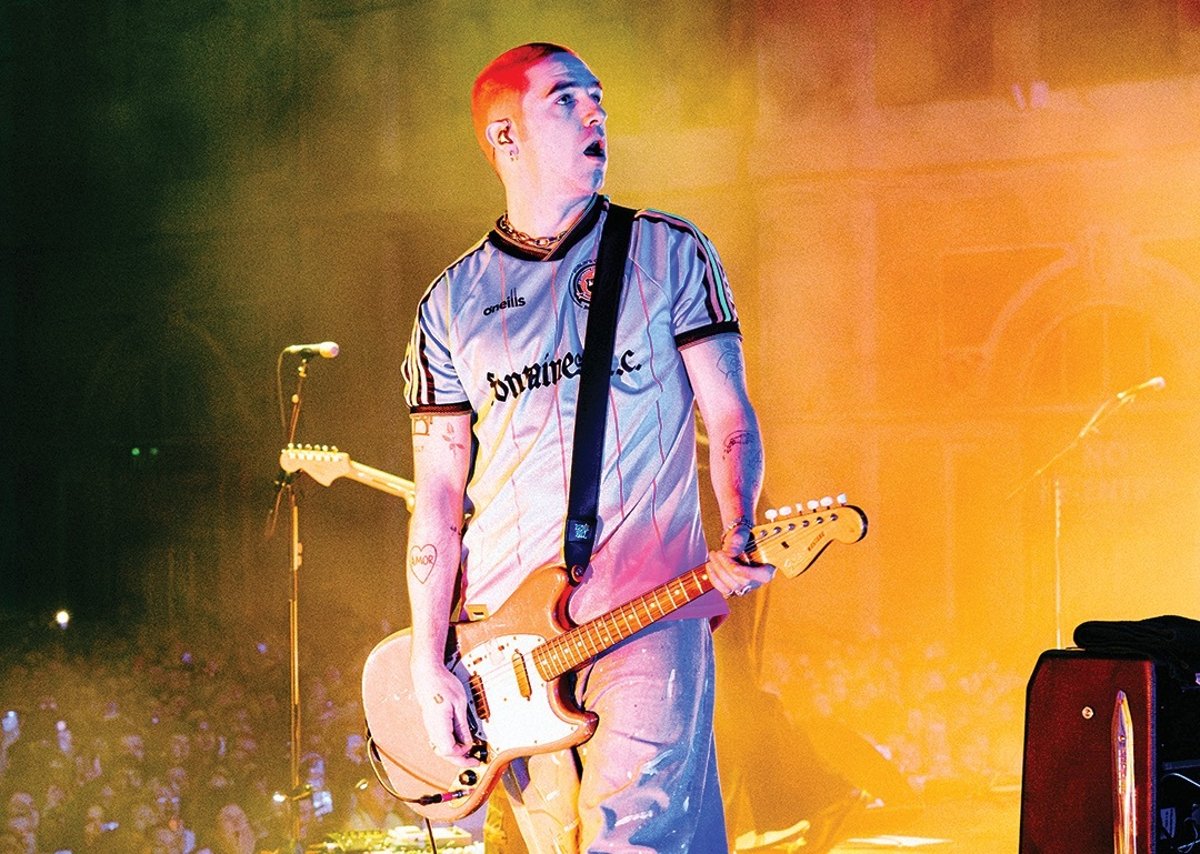
When the much-loved frontman of Aslan, Christy Dignam, passed away, Bohemians did not convene a meeting to discuss how to respond. They made a jersey quickly, wore it, and raised €150,000 for the hospice that had cared for him in a week, through word of mouth alone. No press release, no paid promotion, just action and a community that responded to it. That is the model in its purest form.
Each Bohemians shirt is, as their COO Daniel Lambert has described it, a souvenir of a set of values. That is why they do not become obsolete at the end of a season the way a conventional kit does. People still buy the Bob Marley shirt years after its release because what it represents has not changed. The commercial strength this has built now extends to competitive strength on the pitch. A club generating €2 million a year from shirts does not need to sell its best players unless they want to.
A shirt that travels beyond the fanbase creates an opportunity that is easy to miss in the excitement of a record launch. Someone who buys a Cwmbran Celtic shirt because they love Mogwai, or a Cambridge United shirt because they love Pink Floyd, has just told the club something about themselves. They are not a season ticket holder or a regular in the away end. They are a new customer with a specific interest, and what the club does next decides whether that purchase is a one-off or the start of a relationship.
With the right permissions, a club can find out what attracted that person, tell them about future releases and give them reasons to stay involved. The first shirt is a single transaction, but a second collaboration, a limited edition or an invitation to a match is where a relationship begins. That is far easier for clubs that bring their retail, ticketing and supporter information together, because they can see which customers are buying for the first time, spot purchasing patterns and send relevant messages rather than treating every shirt sale as an isolated order.
It also depends on the basics working. A distinctive shirt can bring attention from people who have never visited the club's website, but that attention only turns into revenue if stock levels, delivery and checkout are up to it. Grimsby's long-sleeved shirts selling out within days is a good problem to have, but it is still a problem if the club cannot respond.
None of this requires Grimsby's scale. For a smaller club, an extra hundred sales, a new local partnership or a successful limited edition could make a meaningful difference to its finances. The ambition should reflect the size of the club, but the opportunity is available throughout the pyramid.
The growing interest in these shirts is also being felt in the collectors’ market, where rarity, design and the stories behind individual releases can all influence desirability. Rob Lough, co-founder of Showboat, a football shirt collectors' app that helps enthusiasts catalogue and value their collections, believes clubs further down the pyramid are becoming increasingly interesting to collectors.
“What we’re seeing in our data is that football shirt collecting is moving well beyond the big clubs and iconic designs of the 1990s. Fans and collectors increasingly want shirts that tell a story, and some of the most interesting examples are coming from clubs like Grimsby Town, Newport County and Cambridge United.
“These are shirts that have been designed with real thought and care, that capture a particular moment in a club’s history, and are often produced in smaller numbers. All of that adds to their appeal and, potentially, their long-term collectability.”
There is a danger in looking at these examples and concluding that every club now needs a musician on its third shirt or a plane ticket to Naples but the lesson is almost the opposite.
The clubs doing this well are looking inward before they look outward. What happened here? What do our supporters remember? What belongs to our town? Which old shirts still mean something? Which people, places, industries, songs or moments feel like ours? The product follows from those answers, and the specificity is what makes it work. A Cambridge United shirt about Cambridge. A Newport County shirt about Newport. A Grimsby Town shirt that is, as Jack Johnson said, unapologetically Grimsby.
That matters because the relationship between a supporter and a football club is already unusually deep. Football does not have to manufacture the emotional attachment that almost every other consumer business spends enormous amounts of money trying to create. The supporter has often inherited it, built it over years of matchdays, passed it across generations. The commercial opportunity is to give that attachment more places to go.
A season ticket is one expression of it, membership can be another. So can hospitality, events and content. Increasingly, merchandise is becoming a much more sophisticated part of that same relationship, and the clubs that recognise it are generating revenue that did not previously exist, reaching audiences they could never reach through conventional marketing, and making supporters feel that their club genuinely understands itself.
Occasionally, if the shirt is good enough, it makes everybody else want a piece of it too.
One practical idea for your club, every fortnight. No spam, unsubscribe any time.
You've made the team sheet.
The next issue of the Clubhouse lands in your inbox soon.
Missed the target.
Check your email address and have another shot.
Read by club owners, commercial teams and ticketing managers.