The Clubhouse
The Four Types of Football Fan and What Each One Actually Wants
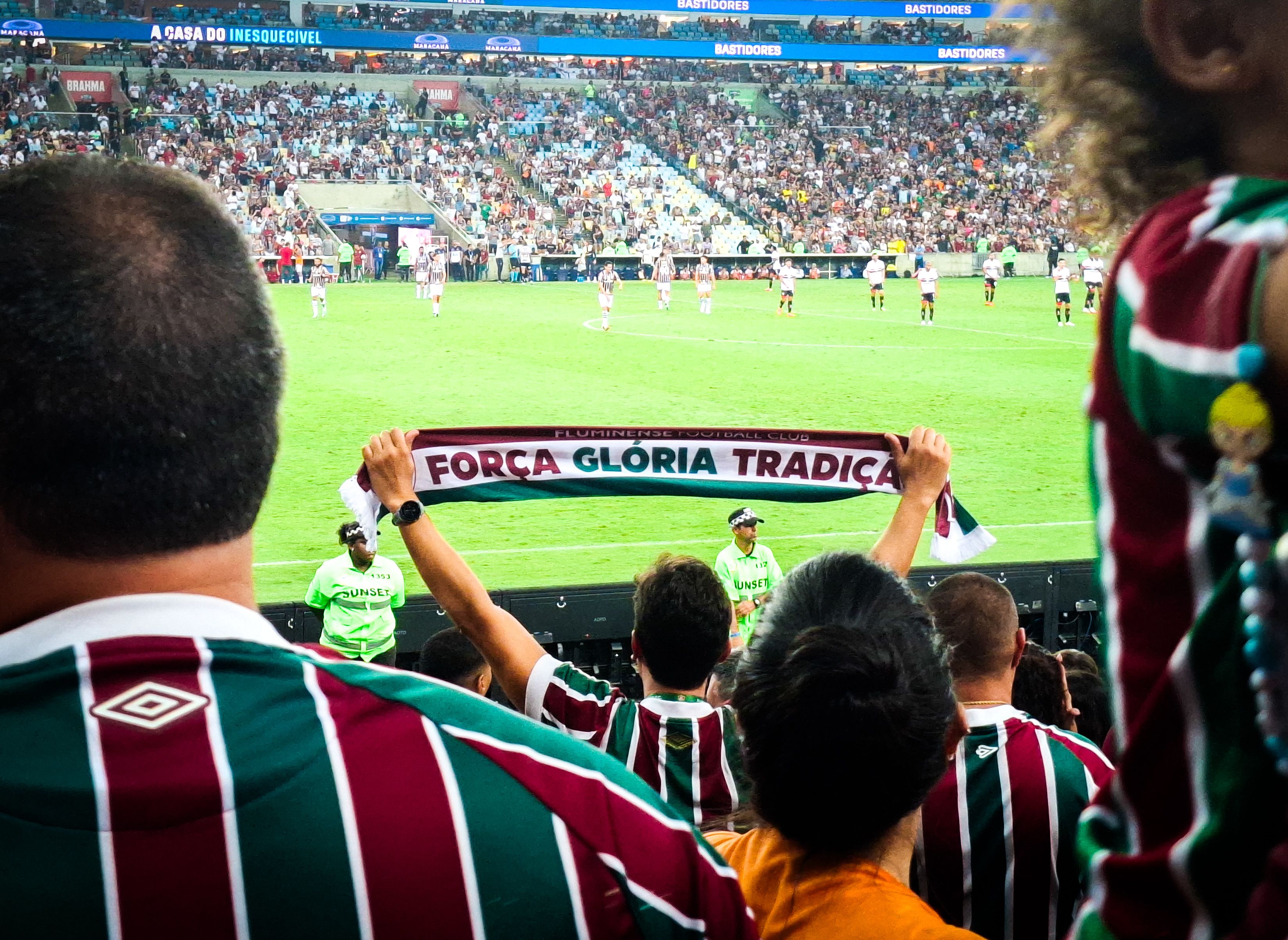


Most clubs, when they sit down to write a matchday email or design a ticket offer, are writing for an imaginary average supporter. Someone who attends fairly regularly, spends a reasonable amount, responds to a decent promotion and cares enough to renew their membership but not so much that they would come regardless. The problem is that this person does not really exist.
New research from the Global Experience Economy, based on 1,525 live football fans across the UK, US and Germany, used statistical analysis to identify four distinct types of supporter. The research focused on top-flight football across those three markets, so the absolute spending figures will look different at non-league or lower-league level. But the underlying behaviours, why different supporters attend, what motivates them and how they respond to commercial offers, are recognisable at every level of the game. They attend the same matches, often sit in the same stands and pay similar prices for their tickets, but their motivations, spending habits and relationship with the club are fundamentally different. Treating them the same way is not just inefficient. It means clubs are consistently missing opportunities with the supporters most likely to respond.
Here is what the research found, and what it means in practice.
Nearly half of all supporters fall into this category, which makes them the most commercially significant group by some distance.
Big-Match Believers are occasion-led. They do not necessarily attend every game but when they do, they commit fully to the experience. They spend the most of any group on a matchday, they are the most open to premium offers, food and drink upgrades and hospitality, and they are the most responsive to sponsorship and partnership activations when those feel relevant to the occasion.
The key word is occasion. This supporter is not buying a routine. They are buying an event, something worth turning up for, worth spending on and worth remembering. The commercial implication is that clubs should lean into that framing rather than fighting it. A season ticket pitch that sells routine attendance will not land with this group anywhere near as effectively as one that sells access to the big moments. A hospitality offer framed around a specific fixture, a derby, a promotion run-in, a cup tie, will convert better than a generic premium package.
These are also the supporters most likely to respond to bundles that include food and drink credit, because they have already decided they are going to spend. The question is whether the club captures that spend or whether it leaks to the pub and the car park before they arrive.
Social Attenders are the family and group audience. They rarely attend alone and the match itself, while enjoyable, is often secondary to the experience of doing something together. The research found that only 5% of fans attend on their own, which tells you something important about how most people experience matchday. For Social Attenders, the social dimension is not just a feature. It is the whole point.
They spend more than you might expect. Families in the research were spending £333 on a matchday on average, against £156 for everyone else. Those are top-flight figures and the absolute numbers will be smaller lower down the pyramid, but the gap between what families spend and what individuals spend is consistent at every level. A family outing is not one ticket, one portion of chips and one soft drink. It is multiple of everything, across a longer day, with more decisions to make.
The challenge is that Social Attenders find complexity frustrating. Planning a family or group outing already involves enough coordination without a ticketing system that makes it difficult to book adjacent seats, or a stadium where queues at half-time make getting food for four people an exercise in stress management. The research points clearly towards bundles, easy pre-planning and frictionless group booking as the levers that move this audience. They are not resistant to spending more. They are resistant to effort.
A family package that bundles tickets, parking and food vouchers into one simple purchase, communicated early enough to fit into their planning window, is exactly what this group is looking for. Most clubs are not offering it.
This is the supporter every club feels proud of and, commercially speaking, the one most clubs inadvertently take for granted.
Devoted Regulars attend consistently. They are the atmosphere engine of the ground, the ones who know the words to every song, who have sat in the same seat for a decade and who would turn up in a storm. Their commitment to the club is genuine and deep, but the research flags something important: they are resistant to being sold to. Approach them with an aggressive upsell and they are more likely to feel that their loyalty is being exploited than to respond positively.
The commercial strategy here is not to squeeze more revenue from this group but to protect the relationship. That means making sure the matchday experience stays consistent and good, that their loyalty is recognised rather than assumed and that communications reflect how long and how faithfully they have supported the club rather than treating them like a prospect who has not yet bought enough.
If a Devoted Regular feels valued, they renew, they advocate and they bring people. If they feel like a revenue unit, they start asking whether it is still worth it. The downside risk of getting this wrong is considerably larger than any short-term upsell opportunity.
Small in number but worth understanding clearly.
Solitary Watchers are there for the football and essentially nothing else. They want a clear sightline, a quick entry, a quick exit and as little friction as possible in between. They are the lowest spenders of any group and the least responsive to commercial activity of any kind. They are not anti-social, they simply have a very specific relationship with matchday and any attempt to change it tends to be unwelcome.
The research verdict on this group is straightforward: serve them well but do not try to sell to them. Make the experience clean, efficient and reliable. A fast turnstile, a clear view and an easy route out after the whistle. If you do that well they will keep coming back, and if you do it badly they are the most likely of any group to quietly stop attending without ever telling you why.
They represent a small share of commercial value but a disproportionate share of the loyal, regular attendance that gives a stadium its atmosphere and its sense of continuity. That matters even if it does not show up obviously on a balance sheet.
The practical implication of this research is not that clubs need four entirely separate marketing strategies. It is that treating all supporters as though they are the same will consistently underperform, and that relatively modest changes in how different groups are approached can have a meaningful commercial impact.
A Big-Match Believer and a Social Attender are both potential hospitality customers but for completely different reasons. A Devoted Regular needs to feel appreciated, not targeted. A Solitary Watcher needs the basic experience to work well, nothing more.
The clubs best positioned to act on this are those that understand who their supporters are well enough to communicate with them accordingly. That requires connected supporter data: who attends, how often, how they buy, who they bring, what they spend and how they respond to different types of communication. Without that picture, segmentation like this remains theoretical. With it, it becomes one of the more straightforward ways to improve both commercial performance and supporter satisfaction simultaneously.
As we explored in the commercial value of knowing your supporters, the gap between clubs that use their data intelligently and those that do not is widening. Research like this is part of the reason why.